

Mastering Curved Cover Glass Processing: The Correct Sequence for AG Etching, AR Coating, and AF Surface Treatments
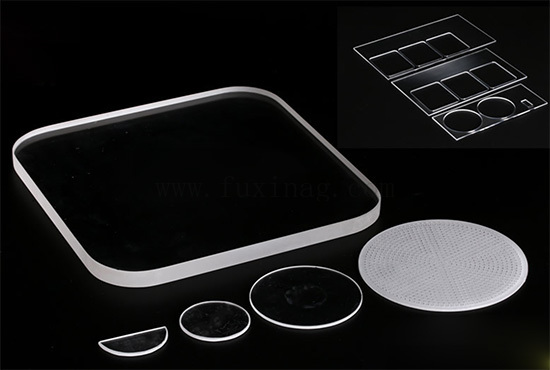
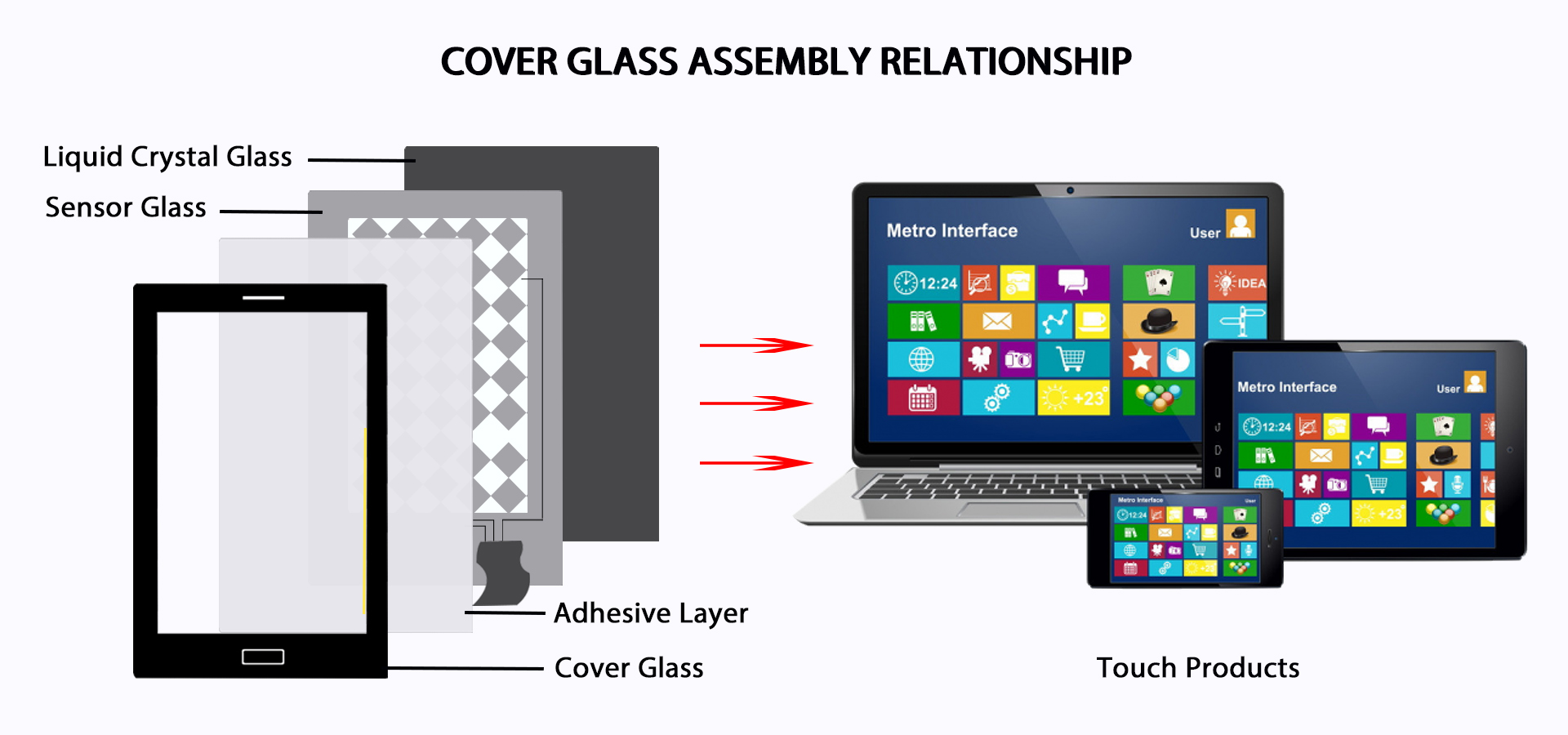
For touchscreen cover glass factories specializing in 2.5D/3D curved (hot-bent) panels used in smartphones, automotive displays, industrial HMIs, medical devices, and kiosks, process sequence is critical. Incorrect order destroys optical performance, coating adhesion, or the compressive stress layer from chemical strengthening, leading to low yield, delamination, or field failures. This guide details the industry-proven manufacturing sequence for high-quality curved cover glass, with special focus on AG (anti-glare) etching versus AR (anti-reflective) and AF (anti-fingerprint) surface treatments.
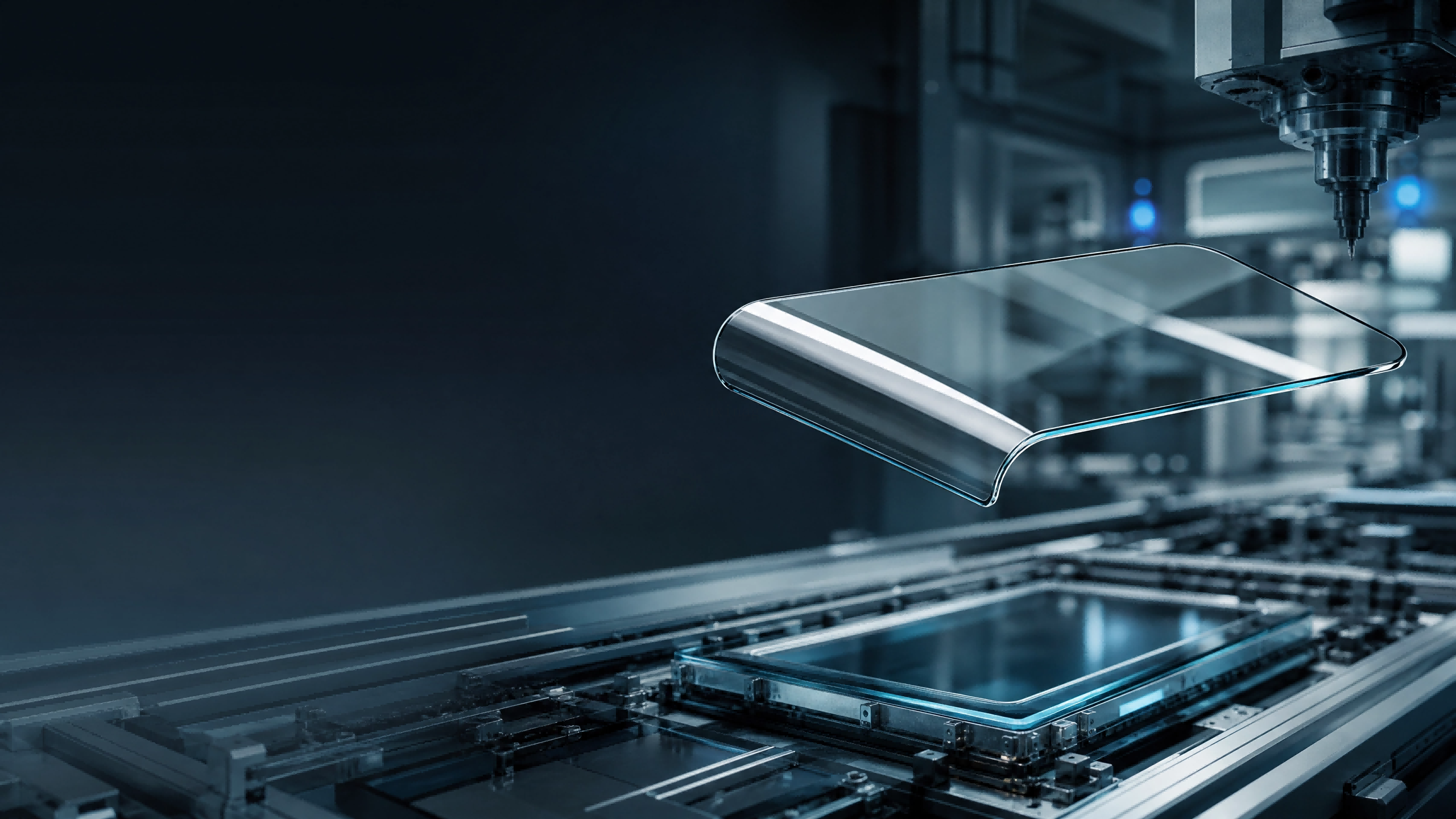
Typical Full Process Flow for Curved Cover Glass
- Engineering & tooling (drawing review, mold design for hot-bending).
- Raw glass cutting (CNC or laser, with allowance).
- CNC precision machining (contour, holes, edge grinding/chamfering for 2.5D/3D).
- Cleaning (multi-stage ultrasonic + DI water).
- Hot bending / thermal forming (graphite or ceramic molds, controlled preheat–press–cool cycle to achieve target curvature without optical distortion).
- Polishing (double-sided or selective to restore surface quality after bending).
- Chemical strengthening (ion exchange in molten KNO₃, typically 400–450 °C).
- Surface treatments (AG etching + AR/AF coatings — order detailed below).
- Printing (silk-screen, spray, or UV for borders/logos — usually after coatings or carefully sequenced).
- Final cleaning, inspection (optical, dimensional, CS/DOL, haze, contact angle, abrasion), packaging.
Hot-bending is the defining step that differentiates 3D curved cover glass from flat. It must precede final polishing and strengthening so residual stresses and surface quality can be controlled.
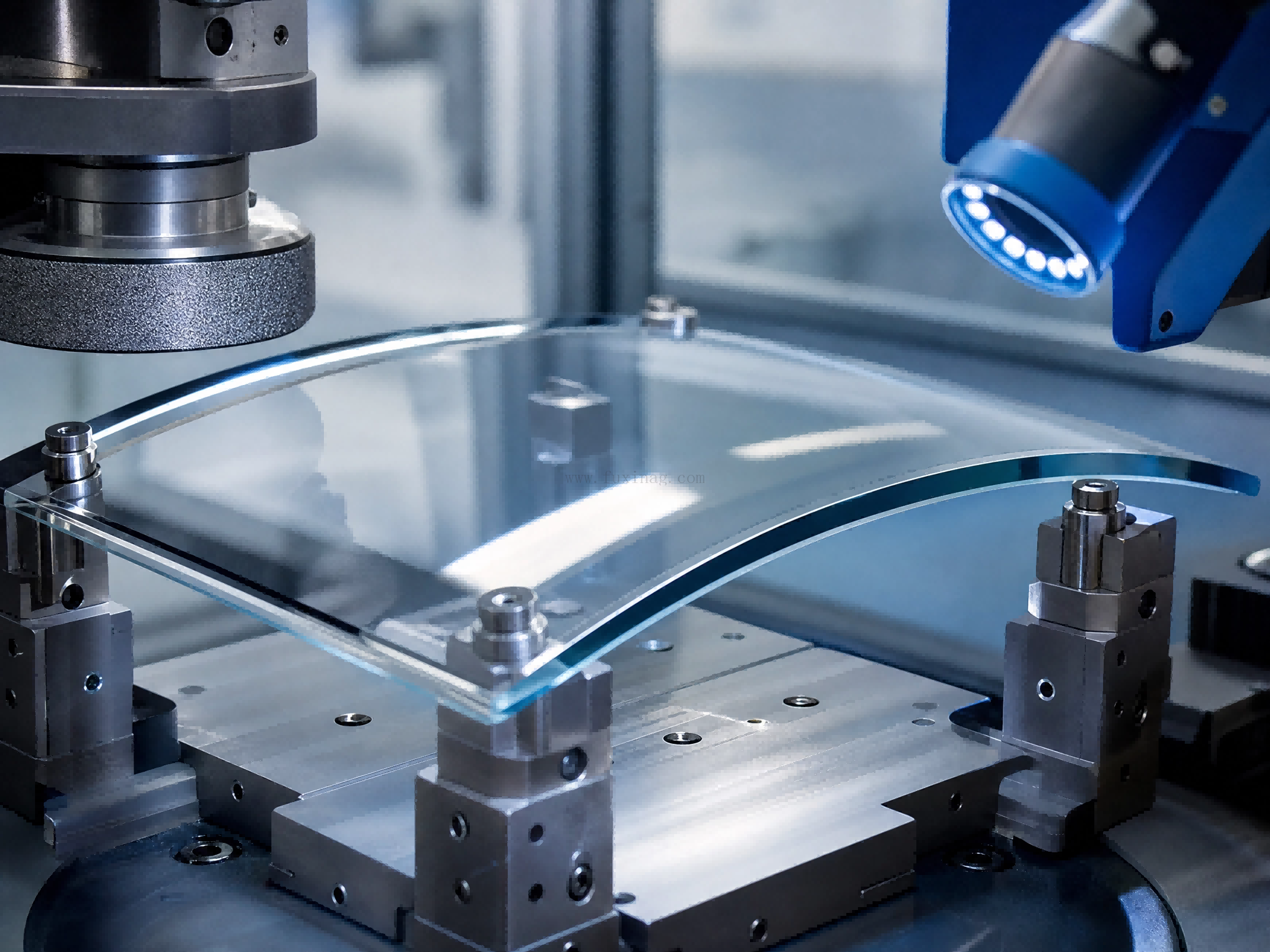
- AG Chemical Etching First (After Hot Bending & Polishing, Before Strengthening)
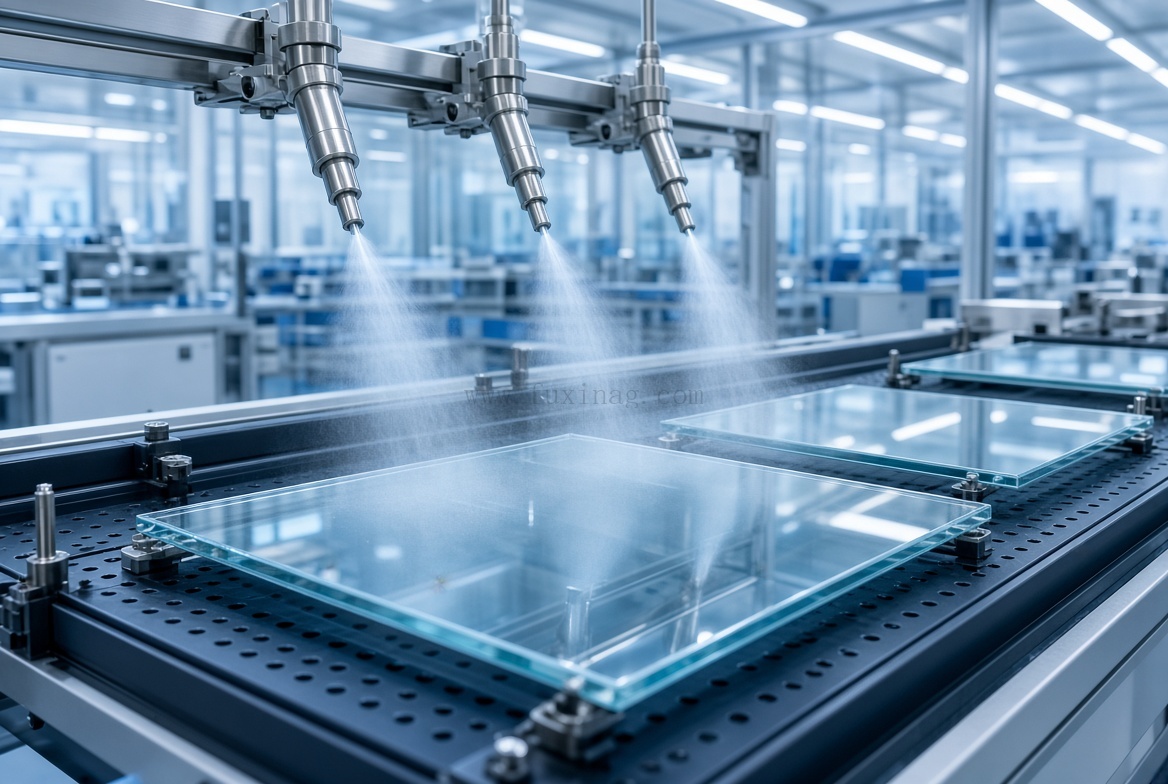
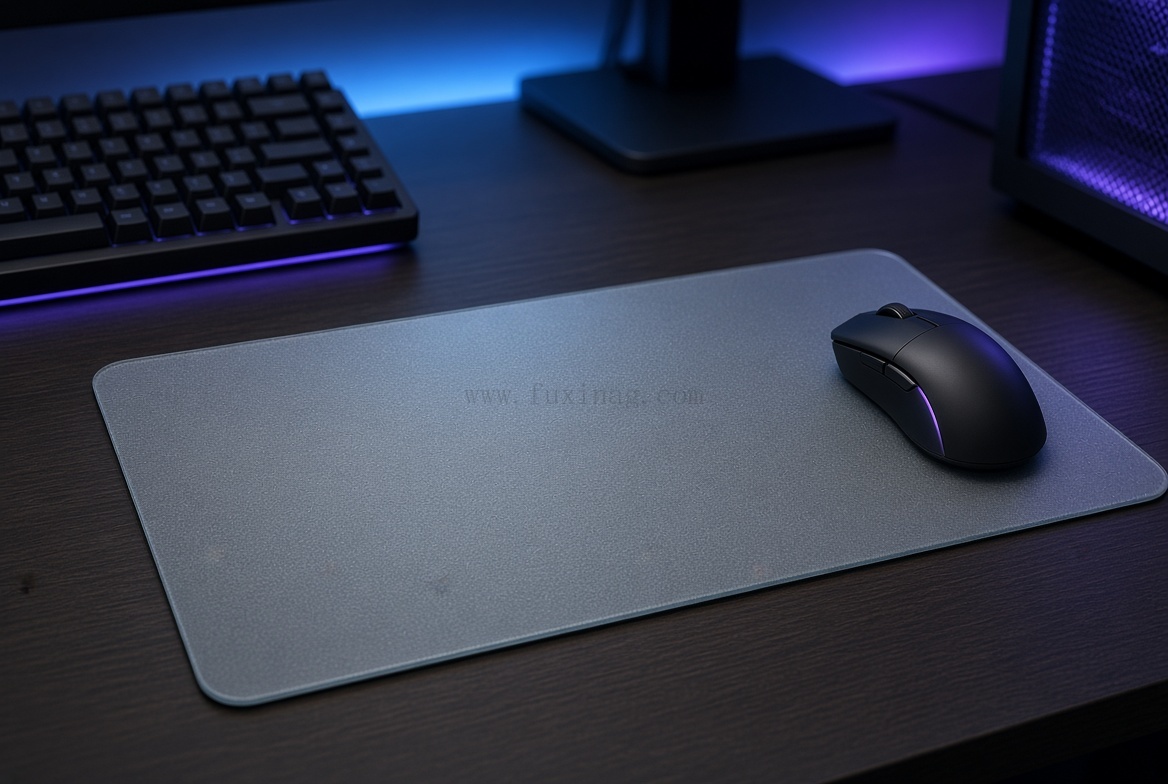
Chemical etching (frosting + chemical polishing) creates a controlled micro-rough surface that scatters light and reduces glare through diffuse reflection. Etching removes a thin layer of glass (typically several to tens of micrometers). Performing it before chemical strengthening preserves the integrity of the compressive stress layer formed during ion exchange. Etching after strengthening would damage the stress profile, potentially causing warpage, reduced strength, or even spontaneous breakage. After etching, the surface remains pure glass, allowing effective potassium-sodium ion exchange. - Chemical Strengthening Next
Immersion in molten potassium nitrate creates a high-compressive-stress surface layer, dramatically improving drop resistance and scratch hardness—essential for touch cover applications. - AR Coating After AG
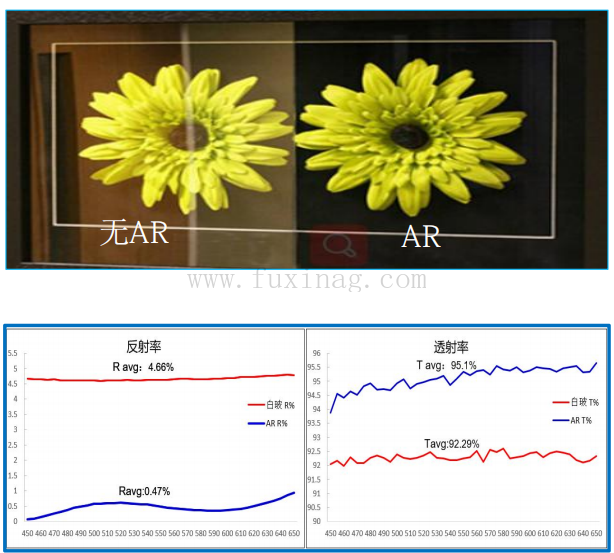
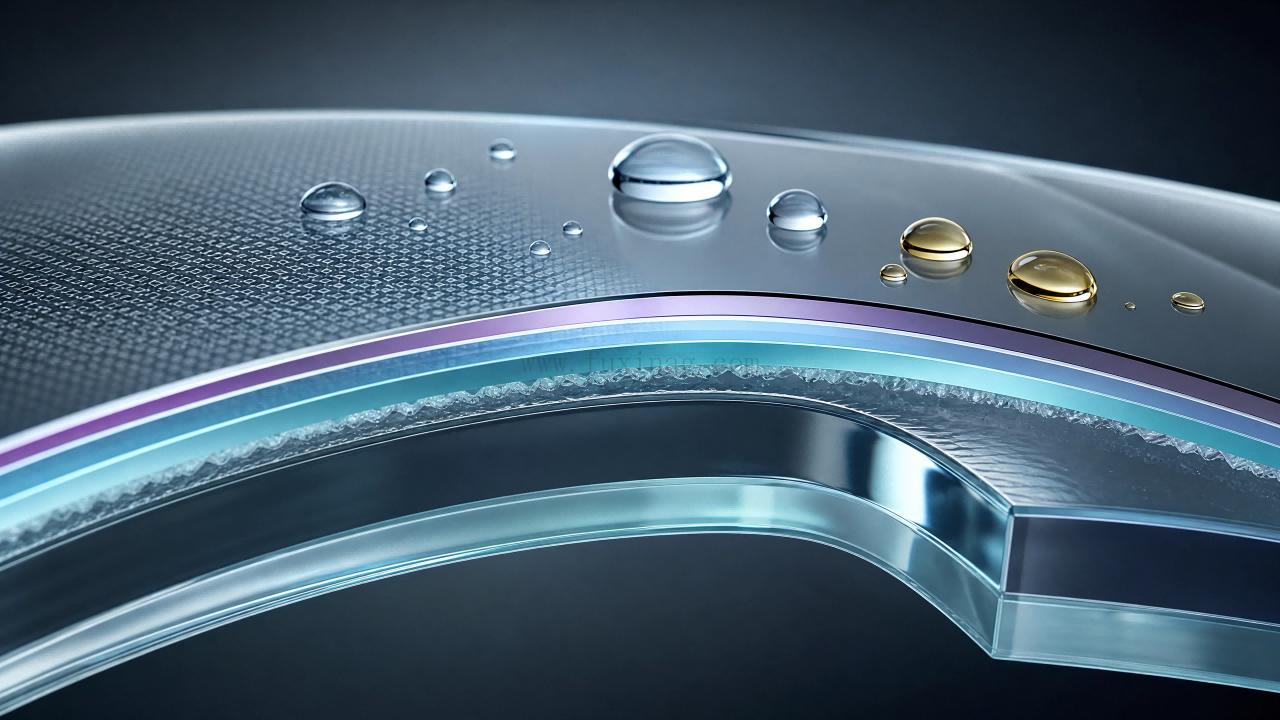
Multi-layer vacuum coatings (typically alternating high- and low-index oxides such as Nb₂O₅ and SiO₂) are deposited on the AG-treated surface. Applying AR after AG ensures proper adhesion on the micro-textured surface and optimizes the combined optical performance (high transmittance + low reflectance). Reversing this order would destroy the AR layers during etching. - AF as the Final Outermost Layer
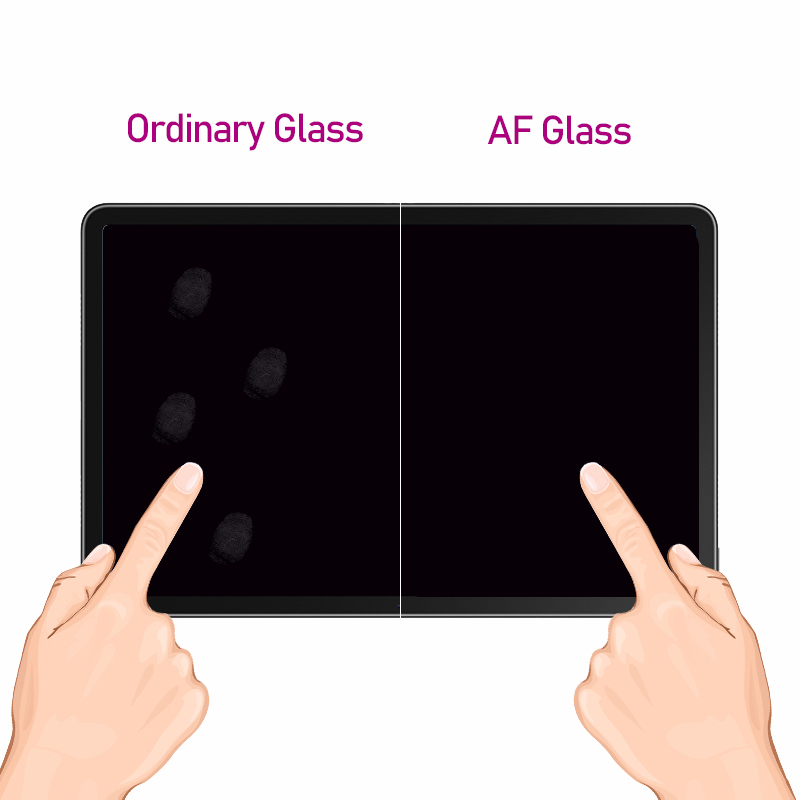
Anti-fingerprint (oleophobic) coating—applied via spraying or vacuum evaporation of fluorosilane compounds—must sit on top. It provides easy-clean properties and a smooth tactile feel without compromising the underlying AR or AG performance. AF is often applied in the same vacuum system immediately after AR or via plasma-activated spraying followed by curing.
If spray-coated AG (SiO₂ particle coating) is used instead of chemical etching, the order shifts: Chemical Strengthening first → Spray AG → AR → AF. High-temperature strengthening would damage the spray layer, so strengthening must precede spraying. Spray AG offers better conformity on complex curves but generally lower durability and hardness compared with etched AG.Combined “3A” (AG + AR + AF) Process Highlights:
After AG etching and cleaning, plasma activation improves AR adhesion. AR multilayers are deposited, followed by AF. Surface roughness after AG is carefully controlled (e.g., Ra 0.15–0.4 μm range) to balance anti-glare effect with coating uniformity and optical clarity.
- Uniformity of etching and coatings is more challenging on curved surfaces due to liquid flow dynamics and deposition angles. Specialized fixtures and process tuning are required.
- Thickness compensation is necessary because etching reduces glass thickness.
- Hot bending must precede AG etching in most cases to avoid distorting the micro-structure during high-temperature forming.
- Final validation includes haze, gloss, transmittance, reflectance, water contact angle, abrasion resistance (for AF), and adhesion tests.