
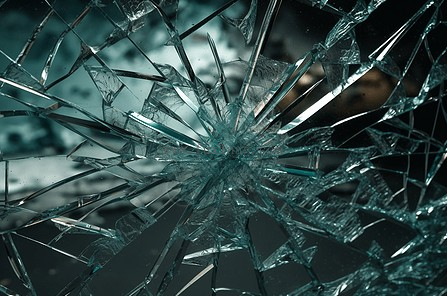
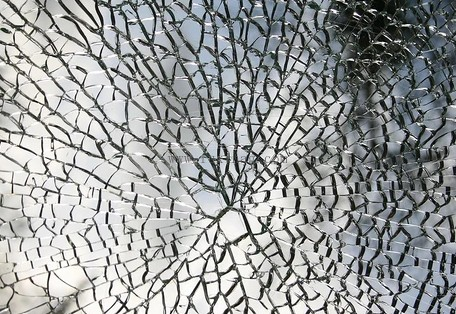
Glass is heated to high temperature and then rapidly cooled to form a compressive stress layer on the surface. Suitable for thicker cover glass (typically ≥3mm). When broken, it shatters into small granules for enhanced safety and excellent impact resistance. Commonly used in outdoor information kiosks, heavy industrial equipment, public terminals, and other high-impact environments. Advantages: relatively lower cost, ideal for large sizes and high-safety requirements.
Chemical Tempering (Ion-Exchange Strengthening)
Performed via ion exchange in a molten salt bath (typically potassium ions replacing sodium ions), creating a high compressive stress layer on the glass surface. Especially suitable for ultra-thin glass (0.5–3mm), maintaining excellent flatness and optical clarity while supporting complex irregular shapes, cutouts, and post-processing. Widely applied in smartphone/tablet covers, automotive center consoles, medical touch interfaces, industrial HMIs, and other scenarios requiring thin profiles, optical bonding compatibility, and precise appearance. Advantages: outstanding strengthening effect on thin glass, minimal distortion, and capability for intricate structures.
Process Selection Guide (for quick decision-making)
- Thickness ≤3mm, high flatness/optical bonding/complex shapes required → Prefer chemical tempering
- Thickness ≥3mm, high impact/safety priority/outdoor heavy-duty scenarios → Prefer physical tempering
- Special requirements can be evaluated for combination solutions or customized strengthening parameters (surface compressive stress, depth of layer, etc.
Physical vs. Chemical Tempering Selection Guide
|
Item |
Physical Tempering |
Chemical Tempering |
|
Processing Principle |
Thermal Stress Strengthening: Glass is heated to its softening point and then rapidly cooled (quenched). This creates high surface compressive stress and internal tensile stress. |
Chemical Strengthening: Glass is immersed in a molten salt bath, where smaller sodium ions in the glass surface are replaced by larger potassium ions from the bath, creating a deep compressive stress layer. |
|
Key Features |
• High strength, safety breakage (small granular pieces) • Slight optical distortion (quench marks) • Cannot be cut, drilled, or reworked after tempering • Cost-effective, suitable for high-volume production |
• Very high surface strength, hardness, and flexural strength • No optical distortion, excellent flatness • Suitable for complex shapes; can be cut after strengthening (edges become fragile) • Low process temperature, minimizes glass deformation |
|
Typical Applications |
• Architectural Glass: Curtain walls, windows, doors, partitions, railings • Appliance Glass: Oven doors, microwave panels, refrigerator shelves • Furniture & Interior: Tabletops, shower enclosures • Automotive Glass: Side and rear windows |
• Consumer Electronics: Smartphone/tablet cover glass, smartwatch crystals • Precision & Optics: Aviation windows, camera lenses, sensors • Thin Glass Products: Bullet-resistant glass, lab ware, special lenses |
|
Processable Specifications |
• Thickness: Usually 3mm – 25mm (most effective above 3mm) • Size: Limited by furnace; max. up to ~3m x 6m or larger; minimum size requirements apply |
• Thickness: Ideal for 0.5mm – 3mm thin glass (can process thicker glass but less economical) • Size: Limited by salt bath tank; better suited for smaller or precision components |
|
Selection Guide |
The go-to choice for most general applications requiring thickness, strength, safety breakage, and cost-effectiveness. |
The specialist choice for applications requiring ultra-thin glass, extreme strength, superior flatness, or post-strengthening machining. |
-
Q1. How do I choose between physical tempering and chemical tempering? What are the main differences?
Physical tempering is suitable for thicker glass (generally ≥3mm). It uses heat treatment for strengthening and breaks into small granules for high safety. Chemical tempering is ideal for thin glass (mainly 0.5–3mm). It uses ion exchange for strengthening, offering better flatness, minimal distortion, and support for complex shapes. We recommend the optimal solution based on thickness, impact requirements, optical needs, and cost. -
Q2. What thicknesses and sizes can you customize? What is the minimum order quantity (MOQ)?
-
Q3. What surface treatments and printing options are available for cover glass?
-
Q4. What is the typical lead time for customization? Do you support expedited orders?
-
Q5. How do you ensure strength and optical performance after tempering? Are test reports available?
-
Q6. Do you accept OEM/ODM projects? Can you provide samples?