

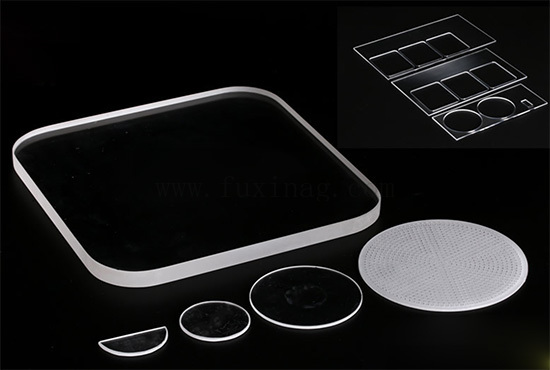
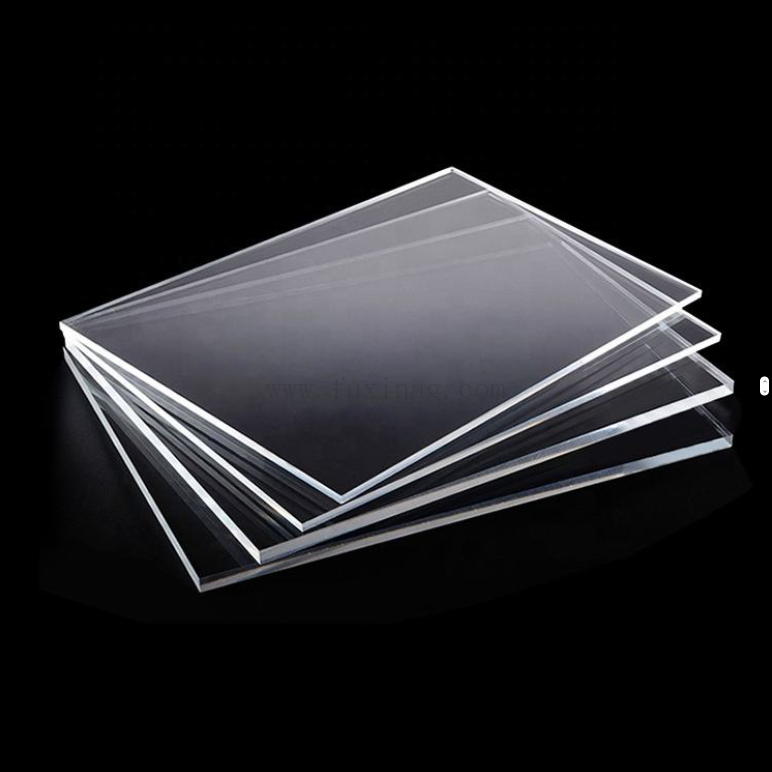
The Optical Science Behind AR Anti-Reflective Coating Cover Glass
For years, the invisible enemy of display clarity has been hiding in plain sight. Every time light hits a standard glass surface, approximately 4% of it reflects back immediately, and another 4% reflects when it exits the opposite side. In complex multi-layer touchscreens or EV dashboards, these reflections create distracting glare, visual ghosting, and a milky haze, destroying user immersion and contrast.
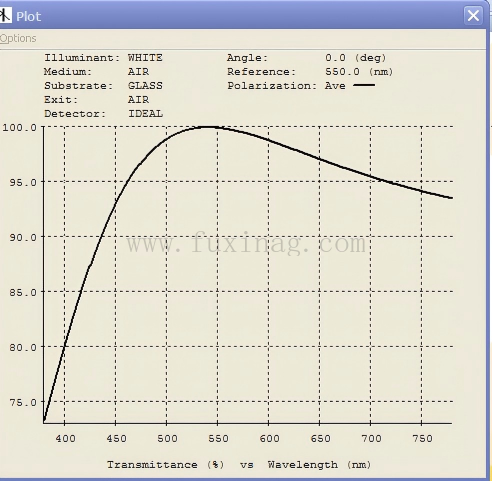
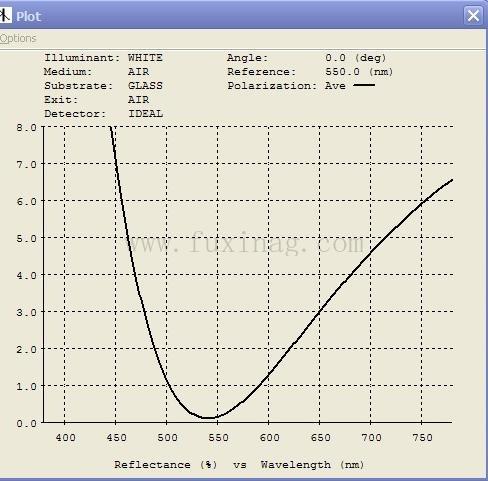
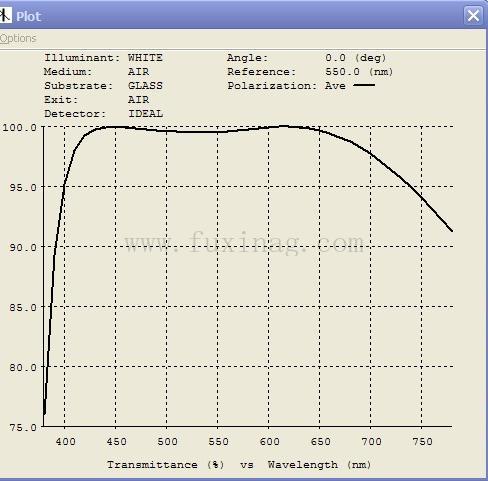
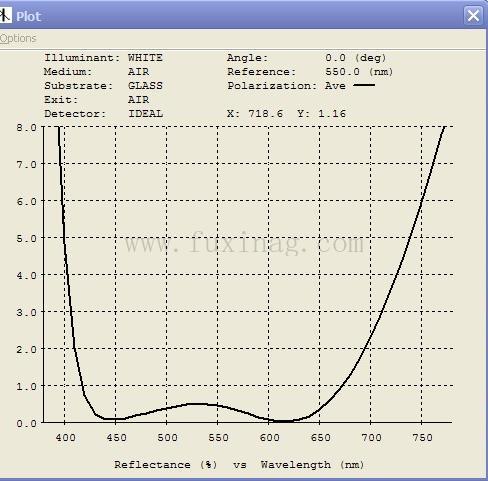
However, the introduction of Anti-Reflective (AR) coated cover glass is changing the physics of visual interfaces. By leveraging nanoscale thin-film interference, modern cover glasses are achieving near-invisibility, pushing light transmittance beyond 98% while suppressing reflections down to less than 0.5%. This press release explores the intricate optical principles that make advanced AR coatings essential for the future of consumer electronics, automotive displays, and smart infrastructure.
The Physics of Glare: Understanding Fresnel Reflection
To understand AR coating, one must first understand the uncoated glass. When incident light passes from air (refractive index n≈1.0) into a glass substrate (n≈1.5), the sudden change in density causes Fresnel reflection. For standard soda-lime or aluminosilicate cover glass, approximately 4% to 4.5% of the light is reflected at each air–glass interface, leading to a total transmission of roughly 92% for single-pane glass. In an eight-element optical lens system, these 4% losses accumulate, translating to an overall throughput of roughly 89% due to reflection at each air-glass boundary. This scattering reduces contrast and introduces ghosting, which degrades image quality in machine vision and causes readability issues in sunlight.
How Thin-Film Interference Cancels Reflection
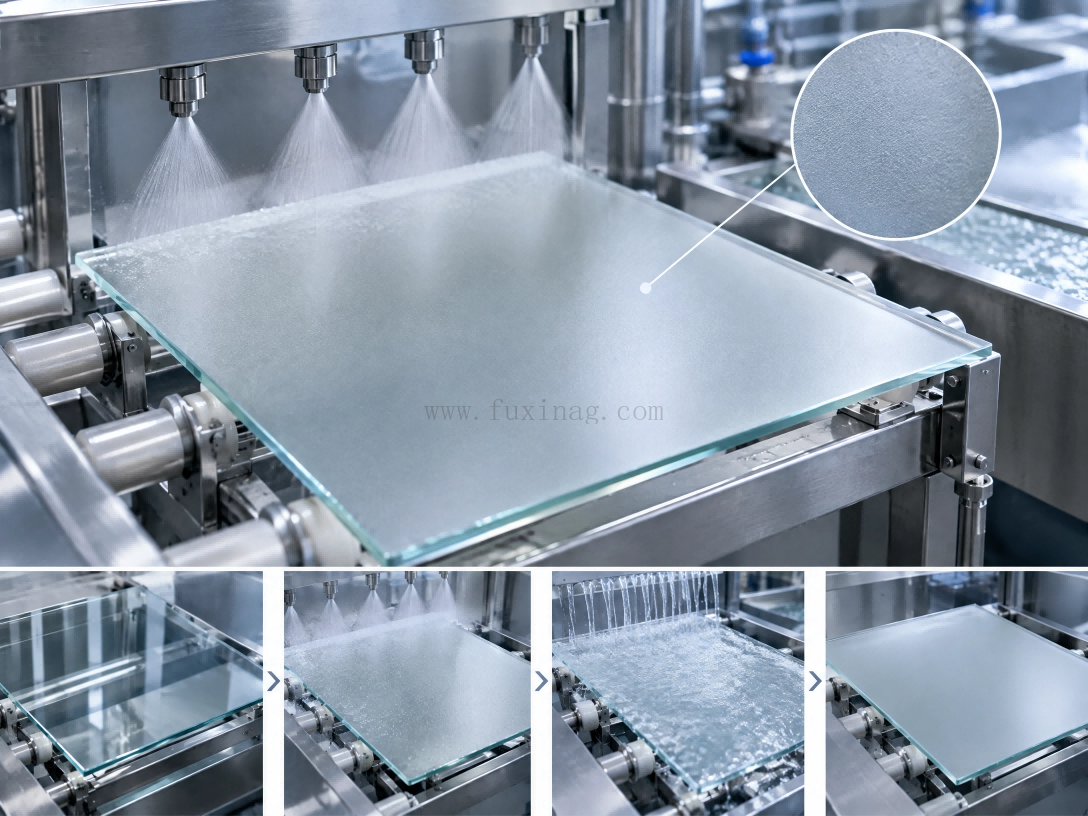
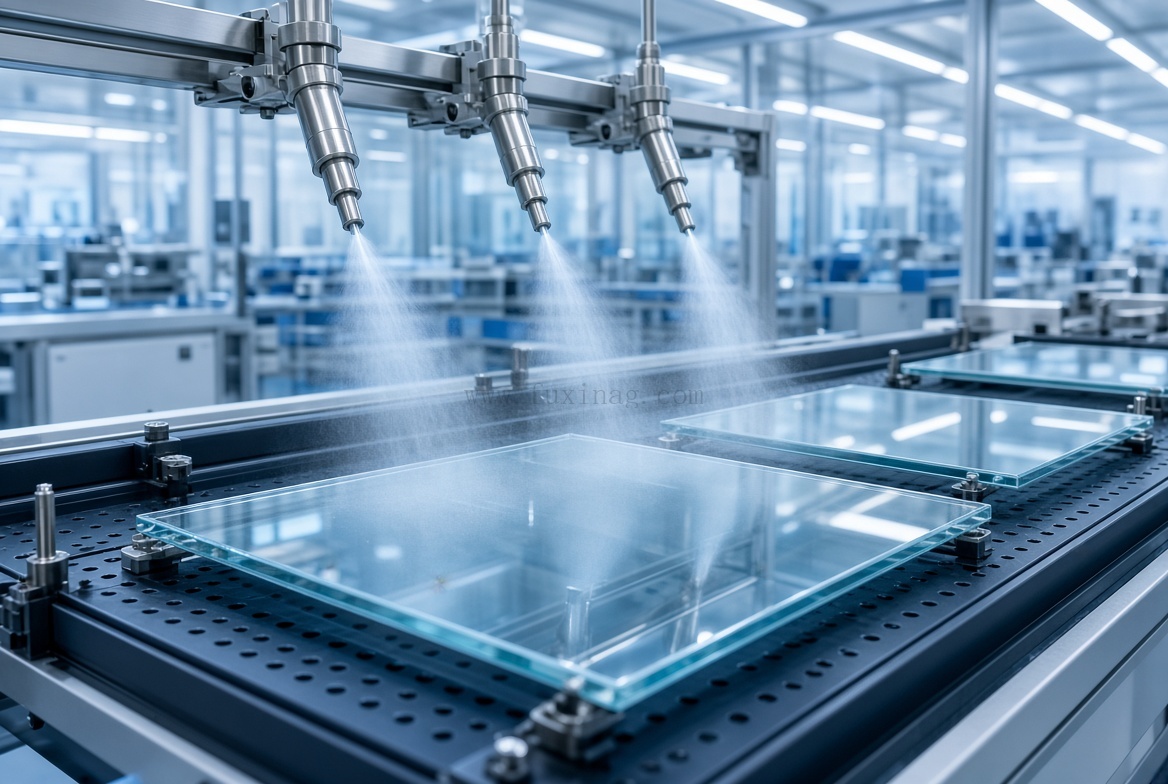
AR coatings utilize a concept known as destructive optical interference. A thin dielectric film, typically composed of metal oxides or magnesium fluoride (MgF₂), is deposited on the cover glass surface—commonly via magnetron sputtering or physical vapor deposition (PVD).
When light strikes the coated surface, it reflects from two points: the top (air–film) interface and the bottom (film–glass) interface. If the film is engineered with a specific refractive index (nf) and precise thickness, the wave reflected from the bottom interface travels an extra optical path length of 2nfd. When this extra distance equals exactly half the wavelength (λ/2), the returning wave arrives 180 degrees out of phase with the wave reflected from the top interface, and the two cancel each other out.
Mathematically, the condition for complete cancellation is:
-
Phase condition: 2nfd = λ/2 → d = λ / (4nf)
-
Amplitude matching condition: nf ≈ √(n0 × ns)
For a typical cover glass in air, the ideal refractive index for a single-layer coating is √(1 × 1.5) ≈ 1.22. This condition ensures that the reflected waves return with both opposite phase and matching amplitude to fully cancel each other, leaving the glass surface virtually reflection-free at the target wavelength.
However, since most practical AR coating materials have refractive indices higher than 1.3, leading OEM manufacturers often use multilayer stacks—alternating layers of high-index materials (such as TiO₂ or Ta₂O₅) and low-index materials (such as SiO₂). This approach extends the anti-reflective bandwidth across the full visible spectrum (400 nm to 700 nm) and reduces average reflectance to below 0.5%. In today's advanced multilayer broadband AR coatings, light transmission can reach ≥98% with haze values below 0.2%, delivering exceptional display clarity across a wide range of viewing angles and wavelengths.
Conclusion: Clarity is the Ultimate Interface
As the digital world converges with physical spaces, the quality of our viewing experience depends increasingly on what we do not see. AR anti-reflective coating technology eliminates visual clutter at the physical layer, allowing transparency, brightness, and color accuracy to reach their full potential. Whether for premium consumer electronics, high-precision optical instruments, or next-generation XR wearables, AR-coated cover glass is redefining what it means to look through glass. The future of display is clear—and it starts with optics.