Leave Your Message
Choosing China’s top Heat Protection Glass suppliers requires more than comparing prices or polished factory websites. A reliable evaluation should examine solar heat gain, visible light transmission, U-value, coating durability, glass thickness, and insulating glass performance. These details affect whether a façade stays comfortable under strong summer sunlight.
Dr. Stephen Selkowitz, a respected building-energy researcher, stated, “Windows are the weak link in the building envelope.” His observation remains practical. A poorly specified glass unit can turn a modern office into a bright, overheated room. The right supplier should provide tested Low-E or solar-control glass, stable coating quality, precise edge processing, and consistent tempering. Factory records, laboratory reports, sample approvals, and project references also matter.
China has many capable manufacturers, but “top” is not a universal label. One supplier may excel in oversized architectural panels, while another performs better with residential IGUs or customized colors. Buyers should compare EN, ASTM, or equivalent test results carefully. Site audits can reveal production details that brochures hide, such as storage conditions, sealant application, and inspection discipline.
There is no perfect supplier.
Even experienced buyers can overlook installation quality, frame design, or local climate exposure. Therefore, this guide focuses on verifiable capabilities, transparent documentation, and practical project fit. The strongest Heat Protection Glass supplier is not always the cheapest. It is the one that delivers predictable performance from sample to completed building.
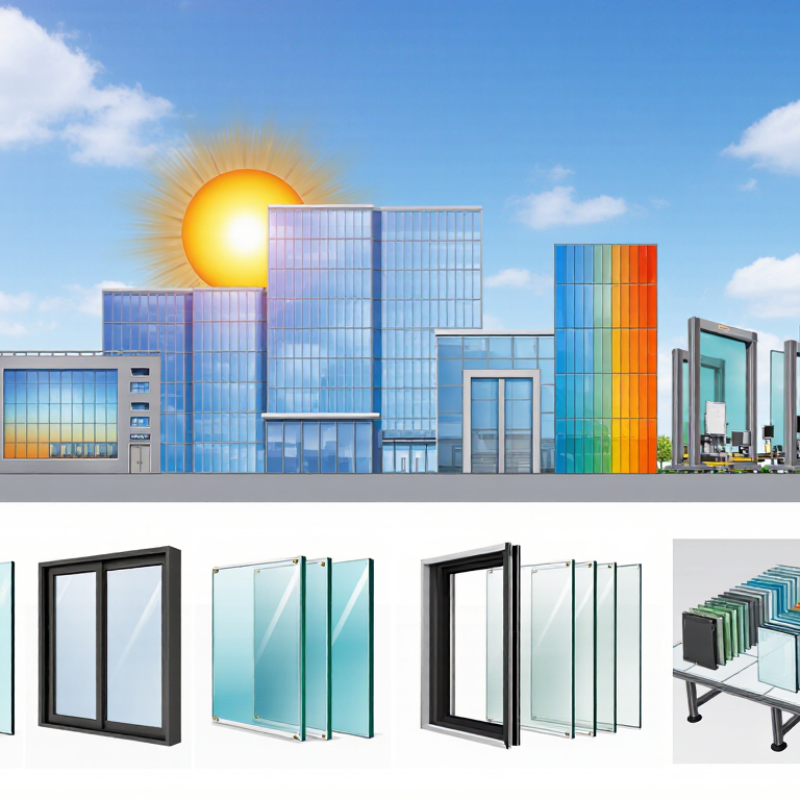
China Top Heat Protection Glass Suppliers?
Heat protection glass controls solar heat before it turns an interior into a greenhouse. It is not simply dark glass. Its performance depends on coatings, glass layers, thickness, and installation quality. When sunlight reaches a window, part of its energy reflects outward. Another portion passes through, while the rest becomes heat inside the glass. Low-emissivity and solar-control coatings manage these energy paths.
A practical example is a south-facing office with a desk near the window. Without suitable glass, the desktop may feel hot by noon, even when the air conditioner runs constantly. A coated pane can reduce infrared transmission and limit ultraviolet exposure. It may also reduce fading on curtains, flooring, and displayed materials. Laminated construction can improve safety and sound control, but it does not automatically provide strong solar protection.
The visible appearance can mislead. A darker window is not always the most effective choice. Light transmission, solar heat gain, insulation value, and local climate should be checked together. Supplier test reports should identify coating position, glass composition, and tested performance. Installation matters too. Poor edge sealing or an unsuitable frame can weaken real-world results. I have found that design assumptions often look perfect on paper, then disappoint in bright rooms. Small mock-up tests can reveal glare, color changes, and unwanted reflections before full installation.
| Evaluation Dimension | Heat-Protection Glass Option | How It Works | Typical Performance or Range | Best-Fit Applications | Important Specification Checks |
|---|---|---|---|---|---|
| Primary solar-control method | Solar-control coated glass | A microscopically thin coating reflects and absorbs part of the sun’s short-wave radiation before it enters the building. | Solar heat gain coefficient (SHGC) commonly falls below clear double glazing; the exact value depends on coating, glass thickness, and insulating-glass configuration. | Curtain walls, commercial façades, offices, hotels, and large sun-exposed windows. | Ask for tested SHGC, U-value, visible light transmittance (VLT), exterior reflectance, coating position, and compatibility with tempering or lamination. |
| Low-emissivity function | Low-E glass | A low-emissivity surface reduces long-wave infrared radiation transfer, helping retain indoor heat in winter and limit radiant heat movement in summer. | Low-E performance is configuration-dependent; double or triple insulating glass can substantially reduce heat transfer compared with monolithic clear glass. | Residential windows, energy-efficient façades, schools, hospitals, and mixed-climate buildings. | Confirm whether the product is passive or solar-control Low-E, plus center-of-glazing U-value, SHGC, VLT, gas fill, and spacer type. |
| Glass color and absorption | Body-tinted glass | Colorants incorporated into the glass absorb a portion of solar radiation and reduce transmitted visible light. | Common shades include grey, bronze, green, and blue; VLT and solar absorption vary by color and thickness. | Façades, skylights, balcony glazing, and projects requiring a consistent colored appearance. | Check solar absorption, thermal-stress risk, edge conditions, color uniformity, and whether heat strengthening or tempering is required. |
| Reflective solar control | Reflective coated glass | A reflective metallic or metal-oxide coating sends a larger share of incident solar energy back toward the exterior. | Often provides lower solar transmission than clear glass, but may also reduce daylight and increase exterior reflectance. | High-rise façades, hot climates, shopping centers, and buildings with strong solar exposure. | Review daylight levels, glare, night-time appearance, reflectance limits, local planning requirements, and coating durability. |
| Insulating construction | Insulating glass unit (IGU) | Two or more panes are separated by a sealed cavity containing air or an insulating gas, reducing conductive and convective heat transfer. | Typical cavity widths are approximately 6–20 mm; argon is commonly used, while wider or triple-glazed configurations can improve insulation. | Energy-efficient windows, façades, noise-sensitive buildings, and cold or mixed climates. | Verify cavity width, gas type, gas retention, seal design, warm-edge spacer, condensation resistance, and total unit thickness. |
| Safety and solar-stress control | Heat-treated glass | Heat strengthening or tempering improves resistance to thermal stress and mechanical impact; it does not by itself create solar-control performance. | Tempered glass has substantially higher mechanical strength than annealed glass and breaks into smaller, less dangerous fragments. | Doors, façades, overhead glazing, shower enclosures, and areas requiring safety glazing. | Specify heat-strengthened or fully tempered glass, thickness, flatness, fragmentation, edge quality, and applicable safety standard. |
| Heat and impact safety | Laminated solar-control glass | A polymer interlayer holds broken glass together and can be combined with tinted, Low-E, or solar-control plies to improve solar and safety performance. | The interlayer can also reduce ultraviolet transmission; exact UV, acoustic, and solar values depend on the interlayer and glass build-up. | Skylights, balustrades, overhead glazing, façades, schools, and security-conscious projects. | Check interlayer type, thickness, edge protection, moisture resistance, acoustic rating, impact classification, and compatibility with the frame. |
| Key thermal metric | SHGC and U-value | SHGC indicates the fraction of incident solar radiation entering as heat; U-value indicates the rate of non-solar heat transfer through the glazing. | Lower SHGC generally means less solar heat gain; lower U-value generally means better insulation. Values must be compared using the same test method and configuration. | All projects where energy use, cooling load, comfort, or daylight must be balanced. | Request certified whole-product or center-of-glazing data rather than relying only on nominal pane descriptions. |
| Supplier qualification | Technical and production capability | A qualified supplier should provide traceable raw-glass data, coating information, processing controls, inspection records, and performance documentation. | Product performance should be supported by current test reports, declarations, samples, and project-specific calculations. | Architectural, residential, infrastructure, and export glazing projects. | Evaluate standards compliance, quality-control procedures, minimum order quantity, lead time, packaging, warranty terms, sample approval, and after-sales support. |
Note: Thermal and optical values vary with glass thickness, coating, pane arrangement, cavity width, gas fill, spacer, frame, and test method. Final selection should be based on certified performance data for the complete glazing system.