How to Use One Way Glass for Privacy and Security in 2026?
As we move into 2026, the demand for privacy and security has intensified. One Way Glass offers an effective solution for both personal and commercial spaces. According to a recent study by MarketsandMarkets, the global market for privacy glass, which includes One Way Glass, is projected to reach $6 billion by 2026. This emphasizes the growing importance of privacy in modern architecture.
One Way Glass allows visibility in one direction while ensuring privacy on the other. This feature has made it a popular choice in offices, homes, and even public spaces. In a recent survey by Frost & Sullivan, 78% of respondents indicated they prioritize privacy in their living environments. However, many consumers remain unaware of the nuances involved in selecting the right type of One Way Glass for their needs.
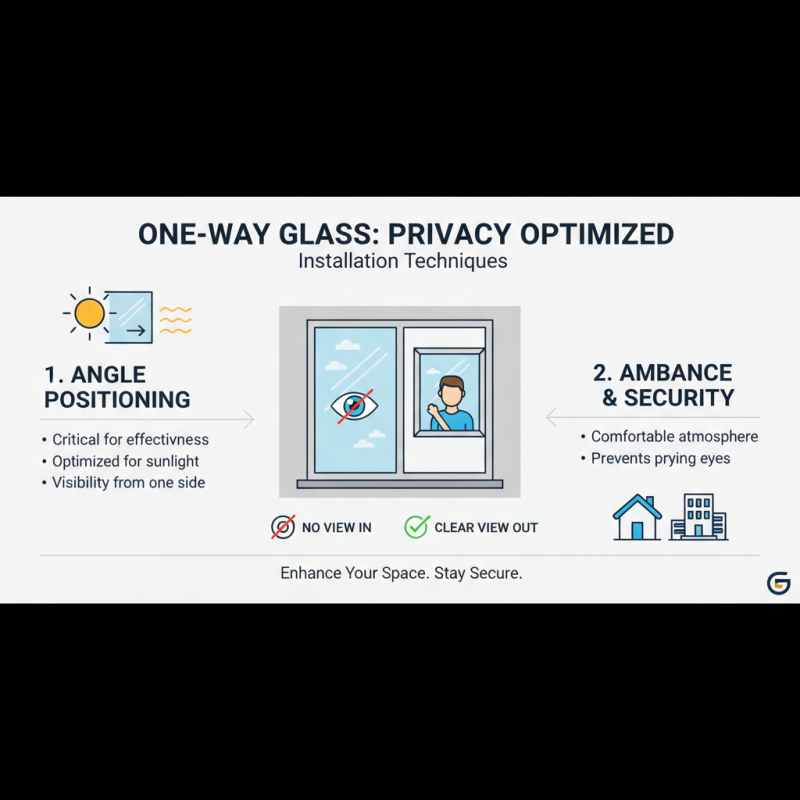
Despite its advantages, One Way Glass is not without limitations. While it provides a sense of security, its effectiveness can diminish in low-light conditions. This has led to ongoing debates in the industry about its reliability. Users must carefully consider factors such as placement and ambient light. So, while One Way Glass offers promising solutions, potential users should critically assess its limitations and applications for enhanced privacy and security.

Understanding One Way Glass and Its Properties
One way glass, also known as mirror glass, is gaining attention for its unique properties. It allows light to pass in one direction while providing a reflective surface on the other. According to industry reports, the global market for one way glass is projected to grow significantly, fueled by its increasing demand in security and privacy applications.
This innovative material is useful in various settings, such as offices, homes, and public spaces. For instance, it enables people to see out without being seen. It often uses a special film or coating, enhancing its effectiveness. However, it is essential to consider that the success of one way glass is influenced by lighting conditions. If the exterior and interior lighting are similar, its effectiveness diminishes.
Tips:
- Ensure that exterior lighting is brighter than interior lighting to maximize privacy.
- Regularly check for smudges or damage to maintain clarity and safety.
- Using one way glass requires thoughtful placement. Position it where privacy is most crucial while allowing natural light to enter.
One way glass isn’t flawless. Users may encounter challenges regarding reflection at different times of the day. Gradients in light can create unexpected visibility issues. Ensuring adequate contrast in lighting will minimize potential risks. Overall, while one way glass enhances privacy and protection, understanding its limitations is vital for effective use.
Applications of One Way Glass for Privacy and Security
One-way glass, also known as reflective glass, offers a unique approach to privacy and security. In 2026, various applications make it indispensable in both residential and commercial settings. For instance, offices are using it to create private meeting spaces without sacrificing natural light. This allows employees to focus while making sure conversations remain discreet.
Homeowners are embracing one-way glass for their windows and doors. It provides a perfect blend of visibility and seclusion. When outside, you see in, but people inside cannot see out. This feature enhances security, especially for homes in busy neighborhoods.
Tips for using one-way glass effectively include choosing the right tint and placement. A darker tint can increase privacy during the day but may not work as well at night. Evaluating the surrounding environment is essential. Trees or nearby buildings can impact visibility through the glass. Testing different settings helps in achieving optimal results.
Usage of One Way Glass in Privacy and Security Applications (2026)
Maintenance and Care for One Way Glass Installations
When installing one-way glass, regular maintenance is essential for optimal performance. Clean the surface frequently to remove dust and fingerprints. Use a gentle glass cleaner and a lint-free cloth. Avoid abrasive materials that could scratch the surface. Over time, the reflective coating can degrade. Inspect it periodically for any signs of wear.
Consider the environmental factors that affect longevity. Excessive heat or moisture can impact the glass's performance. Ensure that your installation is in a climate-controlled environment whenever possible. If you notice any fogging or distortion, it may be time to consult a professional. Don’t ignore small issues, as they can lead to larger, costly problems.
Reflect on the purpose of your installation. Is it for privacy, security, or both? Each application might require different maintenance approaches. Balancing aesthetics and functionality is crucial. Periodically revisit your maintenance routine to adapt to changing conditions and usage. This will help maintain the integrity and effectiveness of one-way glass while ensuring it continues to serve its intended purpose.
Future Trends in One Way Glass Technology for Enhanced Security
As we move into 2026, one-way glass technology is evolving rapidly. The demand for enhanced privacy and security continues to rise. Users expect more from their glass solutions. Advances in smart glass technology allow for better light control and visibility. These innovations provide seamless transitions between transparent and reflective states.
One significant trend is the integration of sensors within the glass. This enables the glass to respond to environmental changes. For example, during bright daylight, the glass darkens automatically. This feature promotes privacy while maintaining a modern aesthetic. However, there remains a challenge in balancing visibility and secrecy. Overloading a space with too much reflective glass can create a confining atmosphere.
Moreover, energy efficiency is becoming crucial. Innovative coatings can now be applied to one-way glass. These coatings minimize heat transfer, reducing energy costs. While this is commendable, some still question durability against wear and tear. Longevity remains an area for improvement. Addressing these issues will foster greater trust in one-way glass applications.
How to Use One Way Glass for Privacy and Security in 2026? - Future Trends in One Way Glass Technology for Enhanced Security
| Feature |
Current Use Cases |
Future Trends (2026) |
Benefits |
| Light Transmission Control |
Office buildings for privacy |
Smart glass with adjustable light transmission |
Improved comfort and energy efficiency |
| Security Enhancements |
Banks and financial institutions |
Integration with security systems |
Increased deterrent against crime |
| Smartphone Compatibility |
Static displays |
Remote control via apps |
User-friendly customization |
| Energy-Efficient Variants |
Traditional glass applications |
Photovoltaic one way glass |
Sustainable energy generation |
| Aesthetic Flexibility |
Architectural designs |
Customizable designs and finishes |
Enhanced visual appeal |