inquiry
Leave Your Message

2026 Best Waterproof Glass Types for Global Buyers?

Choosing the right Waterproof Glass in 2026 requires more than comparing clarity, thickness, or price. Glass itself resists water, but the complete system depends on coatings, edge seals, frames, drainage, and installation quality. This distinction matters for buyers sourcing shower panels, marine windows, façades, skylights, and laboratory enclosures. In real projects, a perfect pane can still leak around a careless gasket. Small details matter.

This guide examines laminated, tempered, insulated, coated, and chemically strengthened glass options for different climates and applications. It considers water pressure, humidity, salt spray, thermal movement, impact risk, maintenance, and expected service life. It also explains when product claims need independent verification through recognized testing and documented factory quality controls. Standards vary by market, so buyers should confirm requirements with qualified local professionals and certification bodies. No single type wins everywhere. A coastal hotel needs different protection from an indoor bathroom. That sounds obvious, yet purchasing teams often overlook it.

The recommendations reflect practical sourcing concerns, including dimensional consistency, sealant compatibility, replacement availability, traceable test reports, and installation support. We will question attractive specifications when evidence is thin. That is important. “Waterproof” can be a marketing shortcut, not a complete performance description. By reading beyond the label, global buyers can compare suppliers more responsibly and reduce failures caused by condensation, corrosion, or hidden edge damage. The strongest choice is not always the most expensive. It is the option that fits the environment, verified performance, and long-term maintenance plan.
2026 Best Waterproof Glass Types for Global Buyers?

Waterproof Glass: Definition, Features, and Core Performance Standards

Waterproof glass is not simply glass that keeps water away. Glass itself is non-porous, but the complete system depends on frames, gaskets, sealants, drainage paths, and installation quality. In site inspections, leaks often appear around corners rather than through the glass panel. This distinction matters for global buyers comparing products for façades, bathrooms, doors, and outdoor enclosures.

Core performance begins with water penetration resistance. Buyers should request test reports for the finished assembly, not only the glass sheet. Common references include ASTM E331 and EN 1027, although local requirements may differ. Laminated glass can improve safety and reduce water entry after breakage. Tempered glass offers stronger thermal resistance, while insulated units need durable edge seals. Check visible defects, seal continuity, drainage openings, and pressure ratings. No single test predicts every storm.

Tips: Ask for test conditions, pressure levels, sample sizes, and installation details. Confirm whether the report covers the frame and hardware. Inspect sealant aging and condensation risks. A higher thickness is not always better. Poor drainage can defeat excellent glass. One practical concern remains: test results may look precise, yet real buildings move, settle, and weather unevenly. Allow qualified local professionals to review climate exposure and installation tolerances before purchase.
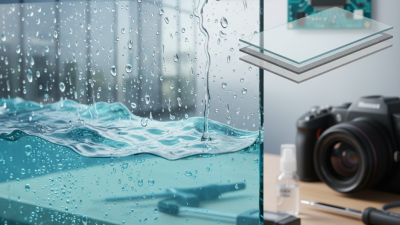
Main Types of Waterproof Glass for Different Global Applications

Waterproof glass is not one product. It is a glass-and-seal system designed for moisture exposure. Laminated glass suits balconies, skylights, and coastal façades. Its interlayer holds fragments after breakage and reduces water entry when the frame is correctly sealed. Tempered glass fits shower enclosures, doors, and high-impact areas. It offers greater thermal-shock resistance, but it is not automatically watertight.

Insulating glass units work well in cold offices and residential façades. Two or three panes, a sealed spacer, and dry gas reduce heat transfer. The International Energy Agency reported that buildings used about 30% of global final energy in 2022. The U.S. Department of Energy also estimates that windows cause 25–30% of residential heating and cooling energy use. Low-emissivity coatings can improve performance, though coating durability depends on exposure and installation quality. A perfect choice rarely exists. Salt spray, wind pressure, drainage, and maintenance can change the result.

Tips: Ask for water-penetration testing, edge-seal specifications, and local climate data. Review standards such as ASTM E331 and ISO 10077-1. Inspect corners carefully. The frame often fails first. Buyers should also compare whole-window U-values, not glass-center figures alone. This detail is easy to miss. Test samples before ordering large quantities, especially for humid or coastal projects.

2026 Best Waterproof Glass Types for Global Buyers

Main types of waterproof glass for different global applications. The chart compares typical application fit on a 1–5 scale, considering water exposure, safety performance, thermal insulation, and resistance to glass failure.

Tempered glass is strong and suitable for wet interiors, while laminated glass retains fragments after breakage and is preferred where fall-through or impact safety matters. Insulating glass units improve thermal performance, and laminated insulating glass combines safety with energy efficiency. Actual waterproof performance depends on edge seals, framing, drainage, installation quality, and compliance with applicable local standards.

How Waterproof Glass Is Manufactured and Tested for Durability

Waterproof glass is not created by glass alone. Durability depends on the panel, edge seals, coatings, and installation details. Manufacturers usually begin with silica-based glass sheets, then cut and polish the edges to remove weak chips. Tempered glass receives controlled heating and rapid cooling, creating stronger surface compression. Laminated glass bonds two sheets around a clear interlayer. Insulated units add a spacer and sealed cavity.

The sealing process needs careful control. Workers clean the glass, apply primary sealant, and add a weather-resistant secondary seal. Small contamination can create a hidden leak path. That detail is easy to underestimate. Coated glass may also receive water-repellent treatment, but coatings cannot repair poor edge construction.

Testing usually combines water pressure, temperature changes, humidity, and mechanical stress. A laboratory may spray water across the panel while pressure simulates wind-driven rain. Samples can then face repeated heating and cooling, followed by inspection for fogging, delamination, cracks, or seal failure.

Accelerated tests reveal weaknesses faster than normal use, but they cannot perfectly predict every coastal or tropical condition. Project teams should check the test method, sample size, and installation frame. A strong result from one configuration may not apply to another. Field inspection still matters, especially around corners, drainage channels, and fasteners. Tiny gaps speak loudly.

Choosing Waterproof Glass by Climate, Building Use, and Safety Needs

2026 Best Waterproof Glass Types for Global Buyers?

Glass itself is non-porous, but a waterproof façade depends on glazing, seals, drainage, and installation quality. For coastal or humid climates, laminated glass with durable interlayers helps maintain safety after breakage. Insulating glass units can reduce condensation, especially when paired with low-emissivity coatings and warm-edge spacers. In freeze-thaw regions, poor edge seals may fail before the glass does.

Building use changes the specification. High-rise offices need wind-load testing, pressure-equalized drainage, and certified safety glazing. Bathrooms, pools, and hospitals need moisture-resistant frames and easy-clean surfaces. For schools and public entrances, tempered or laminated safety glass is usually more suitable than ordinary annealed glass. The International Energy Agency reported that buildings consumed about 30% of global energy in 2022, so thermal performance should not be treated as an optional upgrade.

Tips: Match glass thickness to local wind and impact requirements. Ask for water-penetration and heat-transfer test results, not only marketing claims. Inspect corner seals carefully. They are often overlooked. The 2024 UNEP Global Status Report for Buildings and Construction also stresses better envelope performance as buildings face rising cooling demand. Still, no glass type solves every climate problem. A highly insulated unit may perform poorly with weak drainage or incorrect site tolerances. Review the whole system with a qualified façade engineer before ordering.

2026 Best Waterproof Glass Types for Global Buyers? – Choosing Waterproof Glass by Climate, Building Use, and Safety Needs

Note: Glass itself is non-porous and does not absorb water. Long-term waterproof performance depends on the complete glazing system, including frames, gaskets, sealants, drainage, edge protection, and installation quality.
Glass Type or Configuration Best Climate Conditions Suitable Building Uses Water and Moisture Performance Safety Advantages Important Limitations Typical Selection Level
Tempered Monolithic Glass Warm, humid, temperate, or moderately cold climates where thermal exposure is controlled. Shower enclosures, interior partitions, doors, storefronts, and low- to medium-rise windows. The glass surface is water-resistant. Weather-tightness depends on the surrounding frame, seals, joints, and drainage details. Heat-treated for greater resistance to thermal stress and impact than annealed glass. Breaks into relatively small granules. Cannot be cut, drilled, or modified after tempering. It is not a retention glass because fragments may fall from the opening. Good for standard wet-area and general glazing applications.
Heat-Strengthened Glass Areas with moderate temperature changes, solar exposure, or larger panes where increased thermal resistance is needed. Curtain walls, façades, windows, and insulated glass units where full tempering is not required. The glass is non-absorbent; water resistance is mainly determined by the IGU edge seal, frame, and installation system. Stronger than annealed glass and generally breaks into larger pieces than fully tempered glass. Usually not classified as safety glazing solely because it is heat-strengthened. Local code requirements must be checked. Good for façades requiring improved thermal resistance without full tempering.
Laminated Safety Glass Coastal, storm-prone, high-wind, high-UV, and urban climates, provided the edges are properly protected. Balustrades, overhead glazing, skylights, doors, façades, noise-control windows, and security-conscious areas. The interlayer helps retain broken glass, but exposed or poorly sealed edges can be vulnerable to moisture-related delamination. Retains many shards after breakage and can provide impact, fall-through, acoustic, and solar-control benefits depending on the construction. Requires compatible interlayers, edge protection, and correct storage and installation. Performance varies by interlayer type. Very good where post-breakage retention and moisture exposure are important.
Insulating Glass Unit (IGU) Cold climates, hot climates, and locations with large day-to-night temperature differences. Exterior windows, curtain walls, sliding doors, façades, and energy-efficient residential or commercial buildings. Two or more panes separated by a sealed cavity improve thermal performance. The unit must remain sealed to prevent internal condensation and moisture entry. Can reduce interior-surface condensation when correctly specified. Safety performance depends on the individual panes selected. Seal failure can cause fogging, moisture accumulation, and loss of insulating performance. Not automatically safety glazing. Very good for climate control, provided the perimeter seal and drainage system are reliable.
Low-E IGU Cold regions requiring heat retention or hot regions requiring solar-heat reduction; coating selection must match orientation and climate. Energy-efficient homes, offices, hotels, schools, hospitals, and large glazed façades. Provides the moisture-control benefits of an IGU. The low-emissivity coating does not make the frame or perimeter joint waterproof. May improve interior comfort and reduce condensation risk. Safety depends on whether tempered or laminated panes are included. Incorrect coating placement or unsuitable solar-control selection can reduce performance or increase overheating risk. Excellent for energy performance when climate, orientation, and HVAC loads are evaluated.
Laminated IGU Coastal, hurricane- or cyclone-exposed, cold, hot, high-noise, and high-occupancy environments. High-performance façades, schools, hospitals, airports, residential towers, skylights, and security-sensitive buildings. Combines a sealed insulating cavity with laminated retention. Proper edge sealing is essential in persistently wet or marine environments. Can provide thermal improvement, post-breakage retention, sound reduction, UV filtering, and enhanced impact resistance. Heavier and generally more expensive than basic monolithic glazing. Structural calculations and compatible framing are required. Excellent for combined weather, energy, acoustic, and safety requirements.
Tempered Laminated Glass Storm-prone, high-traffic, coastal, and high-solar-exposure locations where both strength and retention are required. Doors, shopfronts, balustrades, overhead glazing, façades, and impact-sensitive public areas. Offers a robust safety configuration, but the laminate edge still needs protection from standing water, incompatible sealants, and prolonged moisture exposure. Combines the thermal-stress resistance of tempered panes with the retention characteristics of laminated construction. Fabrication tolerances, weight, and edge details require careful coordination. It cannot be resized after heat treatment. Excellent for demanding safety and impact applications.
Fire-Resistant Glazing System Any climate where fire-resistance requirements apply, including humid or coastal regions with suitable tested framing and seals. Fire doors, protected corridors, stairwells, compartment walls, hospitals, schools, and commercial buildings. Weather resistance is provided by the complete tested system, not by the glass alone. Seal and frame compatibility is critical. Designed to meet specified fire-resistance or fire-protection classifications when installed as tested. Must be selected from a tested assembly with approved dimensions, framing, glazing materials, and installation details. Specialized and should be specified only against the required fire rating and local code.
Acid-Etched or Textured Glass with Safety Backing Humid interiors and locations requiring privacy, provided the textured surface can be cleaned and the backing is protected. Bathrooms, spas, shower screens, privacy windows, interior partitions, and decorative façades. The glass remains non-porous, but textured surfaces may retain deposits. Waterproofing still depends on joints, seals, and drainage. Safety characteristics come from the selected tempered or laminated substrate, not from the texture alone. Surface treatments may require compatible cleaning methods and can show mineral deposits more readily than smooth glass. Good for wet interiors where privacy and appearance are priorities.
Global Buyer Selection Checklist
  • Confirm the required safety, wind-load, impact, thermal, acoustic, and fire classifications for the project location.
  • Specify compatible frames, gaskets, sealants, drainage paths, setting blocks, and edge protection together with the glass.
  • For coastal or permanently humid environments, request suitable edge-seal materials and verify resistance to salt, moisture, and ultraviolet exposure.
  • Use tempered or laminated safety glazing where required by local building regulations, especially in doors, low-level glazing, overhead glazing, and fall-risk areas.
  • For insulated units, require quality-controlled fabrication and check for condensation, seal integrity, and correct coating orientation.

Global Standards, Certification, and Buying Factors for Waterproof Glass

2026 Best Waterproof Glass Types for Global Buyers

“Waterproof glass” is not a single certified product. Water resistance depends on glass type, edge seals, drainage, and installation quality. Laminated glass helps protect against impact and leaks, while insulated glass units improve thermal performance when their seals remain intact. For exposed façades, buyers should request test evidence for water penetration, not only a product brochure. ASTM E331 and EN 1027 are widely used façade water-resistance tests. EN 1279 covers insulated glass units, while EN ISO 12543 addresses laminated glass. Standards differ by market. That detail matters.

The International Energy Agency’s 2024 buildings report states that buildings represent about 30% of global energy demand. Window performance can influence heating and cooling loads significantly. Low-emissivity coatings, warm-edge spacers, and correctly specified U-values may reduce losses, but figures depend on climate and frame design. In coastal areas, salt exposure can attack hardware and sealants before the glass fails. Buyers should check solar-control performance, condensation resistance, wind-load calculations, and service temperature limits. Certification must match the final assembly, not just the glass sheet.

Tips: Ask for a recent laboratory report, batch traceability, sealant compatibility data, and installation drawings. Inspect sample corners for clean seals and even spacers. Do not accept “waterproof” without a test method. Field reality is less perfect than laboratory testing. A small drainage mistake can defeat expensive glass. Compare whole-system warranties, inspection procedures, and replacement access before placing a global order.