2026 Best Led Glass for Global Buyers Which One to Choose?
Choosing the right Led Glass in 2026 requires more than comparing brightness, thickness, or showroom appearance. Global buyers now examine optical clarity, LED lifespan, heat management, electrical safety, installation conditions, and after-sales support. A panel that looks impressive in a trade fair may perform poorly beside a sunlit entrance. Real projects reveal the difference.
Dr. Helen Sanders, a recognized building-envelope consultant, has said, “Glass is not just a material; it is part of the building’s energy strategy.” Her observation is especially relevant to Led Glass. The product must fit the building’s purpose, climate, viewing distance, and maintenance plan. Retail displays may need vivid animation and frequent content changes. Hotel lobbies often need softer visuals, quiet operation, and clean integration with interior lighting. Outdoor projects demand stronger weather resistance and dependable sealing.
The choice is not always obvious. Some buyers focus too heavily on pixel pitch. Others ignore repair access until a module fails. That mistake can become expensive. Ask suppliers for tested brightness data, power consumption, sample videos, warranty terms, and installation references. Check the viewing effect from two meters, not only from a catalog image. Request realistic operating conditions.
There is no universal best Led Glass. Tempered laminated glass may suit one project, while lightweight transparent LED film may suit another. Cost matters, but replacement labor matters too. A careful buyer should compare the complete ownership picture, including shipping, commissioning, maintenance, and local technical support. My own practical view is cautious: attractive specifications are useful, but proven performance is more trustworthy.
What Is LED Glass and How Does It Work?
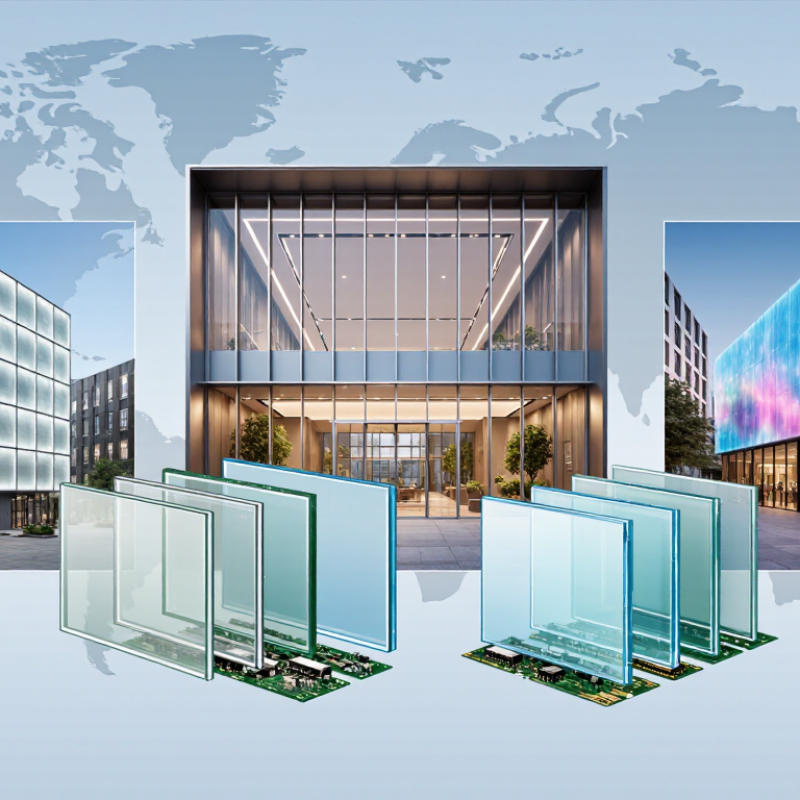
LED glass is a laminated architectural panel with tiny light-emitting diodes sealed between glass layers. Unlike a conventional screen, it can preserve visibility through the panel when the display is inactive. The word transparent can mislead. Electronics control each diode through conductive tracks, power units, and data signals. When an image is sent, selected diodes emit light and form text, graphics, or video. When they switch off, the glass returns to a clearer appearance, although tracks and components remain faintly visible. No panel is perfectly invisible.
For global buyers, performance depends on pixel pitch, brightness, viewing angle, glass thickness, and installation conditions. A narrow pixel pitch creates finer images but usually increases cost and power demand. Outdoor façades need stronger brightness, weather-resistant sealing, thermal design, and accessible maintenance points. Indoor partitions may prioritize transparency, lower weight, and comfortable brightness for nearby viewers. Ask for photometric data, operating temperature, warranty terms, and independent test reports. Do not judge quality from a showroom video alone.
A suitable product should match local building, electrical, and safety requirements. Installers should verify the supporting structure, cable routes, ventilation, and cleaning method before delivery. Content contrast also matters; pale graphics may disappear in strong daylight. A sample viewed at the real distance can reveal more than a specification sheet. Some buyers focus heavily on transparency and later discover limited nighttime visibility. That trade-off deserves careful thought.
2026 Best LED Glass for Global Buyers: Which One to Choose?
LED glass is a transparent display made by integrating LED modules into or onto glass panels. RGB LEDs create images by controlling red, green, and blue light, while the open structure allows daylight and views to pass through.
How to choose: High-transparency configurations are suitable for storefronts and glass façades where daylight and visibility are priorities. Balanced configurations provide a practical compromise between transparency and image brightness. High-brightness configurations are better for sunlit locations, but they normally reduce transparency and require more power. Values shown are representative specification points from common transparent LED display ranges; actual performance depends on pixel pitch, LED package, glass structure, installation angle, and operating conditions.
Key Types of LED Glass for Different Building Needs
Choosing the right LED glass depends on the building, viewing distance, and maintenance plan. Laminated LED glass places diodes between glass layers. It suits premium entrances, museums, and permanent façades. It provides clean integration but increases weight, cost, and replacement difficulty. Transparent LED film fits retrofit projects. Installers can apply it to existing windows, although brightness may drop under direct sunlight.
Transparent LED mesh is better for large façades and atriums. Its open structure reduces wind load and preserves daylight. However, viewers may notice the grid from certain angles. Curved LED glass supports distinctive retail displays, but installation tolerances become stricter. The International Energy Agency reports that lighting uses about 15% of global electricity. Meanwhile, the 2023 Global Status Report for Buildings and Construction links the sector to 37% of global energy-related and process emissions in 2022. Efficient LED glass can support better energy planning, but it does not automatically create a sustainable building.
Tips: Measure daylight first. Confirm brightness in nits, not vague “high brightness” claims. Check viewing distance, glass thickness, IP rating, heat control, and pixel replacement access. Ask for photometric tests. A lower-cost film may be sensible for a temporary campaign, while laminated glass may justify its price in a long-term façade. The choice is rarely perfect. Designers should also question whether the display adds useful information or only consumes energy.
LED Glass Applications in Commercial and Architectural Projects
2026 Best LED Glass for Global Buyers: Which One to Choose?
LED glass is changing how commercial spaces communicate. Retail windows can show motion while preserving daylight. Hotel lobbies use transparent displays for directions, promotions, and event schedules. Museums can layer digital stories over physical exhibits without blocking the architecture.
The application must guide the specification. For close viewing, smaller pixel spacing creates cleaner text and product images. Large façades need higher brightness, weather resistance, and reliable thermal management. Project teams should also check transparency, viewing angles, structural weight, fire performance, electromagnetic compatibility, and front or rear maintenance access. On site, access often matters more than impressive brightness.
The IEA’s Buildings 2023 report states that buildings account for about 30% of global final energy use and 26% of energy-related emissions. Efficient control systems therefore matter, even when LED glass is mainly a display surface. The U.S. Department of Energy’s Solid-State Lighting research reports continue to track improvements in LED efficacy, lifetime, and controllability. Those gains support lower operating demand, but they do not remove heat or cleaning concerns. It looks impressive. Yet installation teams sometimes underestimate reflections, cable routes, and uneven daylight. A transparent display can also reduce visual clarity when content is poorly designed. The better choice balances visibility, serviceability, energy use, and the building’s original character. Something may be technically possible, but not suitable for every façade.
2026 Best LED Glass for Global Buyers: Which One to Choose? — LED Glass Applications in Commercial and Architectural Projects
Typical performance ranges for transparent and architectural LED glass systems
| LED Glass Configuration |
Typical Transparency |
Typical Pixel Pitch |
Typical Brightness |
Typical Power Consumption |
Weather Protection |
Common Installation Position |
Best-Fit Applications |
Main Selection Advantage |
Key Limitation |
| Transparent LED Glass |
70%–90% |
3.9–10 mm |
4,000–6,000 nits |
350–800 W/m² maximum |
Typically IP30–IP65, depending on enclosure |
Interior glazing and protected façades |
Retail storefronts, shopping malls, airports, hotel lobbies and corporate atriums |
High visibility while preserving daylight and outward views |
Lower contrast than opaque LED displays in direct sunlight |
| Laminated LED Glass |
55%–85% |
4–16 mm |
3,000–5,500 nits |
400–900 W/m² maximum |
Depends on glass edge sealing and system design |
Interior partitions, balustrades and laminated façade units |
Premium offices, museums, showrooms, visitor centers and branded architectural interiors |
Clean integrated appearance and improved protection of internal components |
More complex replacement, servicing and structural coordination |
| Transparent LED Mesh Behind Glass |
60%–85% |
6–20 mm |
4,000–8,000 nits |
250–700 W/m² maximum |
Commonly IP65 on the display side |
Behind existing curtain walls or glass façades |
Large commercial façades, media façades, stadiums and transportation buildings |
Lower structural load and easier access for retrofit projects |
Requires suitable cavity depth, mounting points and viewing distance |
| Fine-Pitch LED Glass Display |
45%–75% |
1.5–3.9 mm |
800–2,500 nits |
450–1,000 W/m² maximum |
Typically IP30–IP54 for indoor use |
Interior glass walls and close-viewing environments |
Control rooms, luxury retail, galleries, reception areas and executive briefing spaces |
Sharper text, graphics and close-up video content |
Higher cost, lower transparency and greater heat-management requirements |
| Outdoor Transparent LED Glass |
65%–85% |
6–16 mm |
5,000–8,000 nits |
400–1,000 W/m² maximum |
IP65 or higher when correctly enclosed |
External façades, canopies and covered outdoor structures |
Retail façades, mixed-use developments, public venues and outdoor advertising zones |
Better daytime readability and resistance to dust or rain |
Requires wind-load review, drainage, ventilation and local electrical compliance |
| Curved or Custom-Form LED Glass |
50%–80% |
4–16 mm |
3,000–6,000 nits |
400–900 W/m² maximum |
Project-specific; commonly IP30–IP65 |
Curved walls, columns, arches and feature structures |
Experience centers, cultural venues, luxury interiors and landmark architectural features |
Supports distinctive forms that standard flat displays cannot achieve |
Higher engineering cost and more demanding content calibration |
How Global Buyers Can Choose the Right LED Glass Supplier
2026 Best LED Glass for Global Buyers: Which One to Choose?
Choosing the right LED glass supplier starts with the installation, not the sales brochure. Measure viewing distance, window size, sunlight exposure, and required transparency. A 10 mm pixel pitch may suit a building facade, but it can look coarse in a retail window. Ask suppliers for real videos, brightness readings, power data, and samples under daylight. Small details matter.
Energy performance also needs careful checking. The International Energy Agency reports that lighting uses about 15% of global electricity. The U.S. Department of Energy states that quality LED products can use at least 75% less energy than incandescent lighting and last much longer. These figures are useful benchmarks, not promises for every LED glass display. Request maximum and average power consumption separately. Heat can reduce reliability when ventilation is poor.
A credible supplier should provide test records, electrical safety documents, ingress protection details, warranty terms, and replacement-module procedures. Check whether spare parts remain available after installation. Ask who handles remote diagnosis and response times across time zones. Transparent displays often sacrifice brightness or contrast to preserve visibility. That trade-off is easy to overlook. I would also challenge unusually low quotations; they may exclude control systems, structural work, shipping, or future maintenance. No supplier is perfect. A written acceptance test protects both sides.