How to Choose the Right Heat Protection Glass for Your Needs?
Choosing the right Heat Protection Glass is crucial for safety and effectiveness. Industry expert Dr. Emily Carter, a leading glass technology specialist, emphasizes, “The right glass can significantly reduce heat transfer and enhance comfort.” This insight highlights the importance of selecting the appropriate material for your specific needs.
When selecting Heat Protection Glass, consider your environment and usage. Different settings, from residential to commercial, require varying degrees of thermal insulation. Each application has unique requirements. For instance, large windows in sunny areas need robust heat protection to keep interiors cool.
Yet, many overlook key factors. Quality, thickness, and UV resistance are paramount. Not all glass labeled "heat protection" meets the same standards. Failure to understand these details can lead to costly mistakes. Evaluate your options carefully to ensure maximum efficiency and safety in your space.

Understanding the Basics of Heat Protection Glass and Its Uses
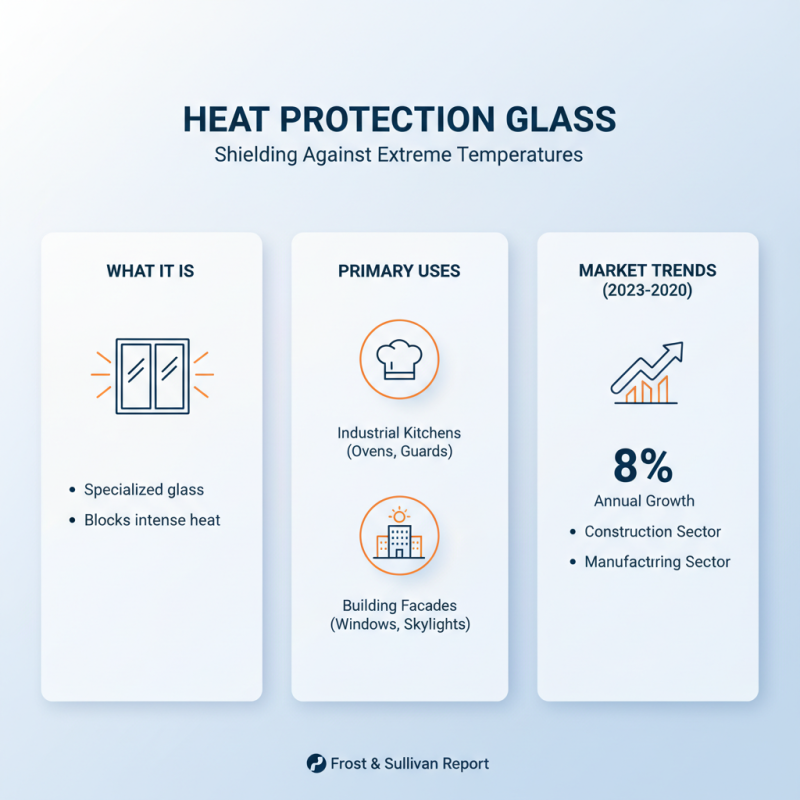
Heat protection glass serves multiple industries by shielding against extreme temperatures. This specialized glass is crucial in environments like industrial kitchens and glass facades. According to a Frost & Sullivan report, the demand for heat-resistant glass is projected to grow by 8% annually through 2030. This showcases its increasing relevance in construction and manufacturing sectors.
Different types of heat protection glass are available. Tempered glass is often favored for its strength and ability to withstand sudden temperature changes. Laminated glass adds another layer of safety by preventing shattering. Researchers from the Glass Association have noted that improperly selected glass can lead to thermal breakage. Choosing the right type requires understanding specific heat resistance ratings.
Moreover, the importance of installation cannot be overlooked. Poorly sealed edges can negate the benefits of high-quality glass. A study highlighted that over 15% of all glass failure incidents stem from installation flaws. Users must reflect on their installation process to maximize glass performance. Good practices include ensuring proper spacing and using appropriate frameworks for support.
Identifying Your Specific Heat Protection Needs and Requirements
Identifying your specific heat protection needs is crucial. Different environments call for varied levels of heat resistance. For instance, industrial settings often exceed temperatures of 1000°F. According to a report by the American Institute of Physics, selecting appropriate heat protection glass can reduce risks of workplace injuries by 30%. Understanding the temperature range and exposure duration is vital when evaluating your requirements.
Consider applications such as commercial kitchens or manufacturing plants. The type of glass should withstand not only heat but also mechanical stress. ASTM standards provide benchmarks for glass resilience. For example, tempered glass can handle thermal stress better than standard glass, making it ideal for high-temperature applications. However, it is essential to reflect on your environment. Assess factors that can lead to unexpected challenges, like rapid temperature changes.
Evaluating your needs also includes considering the glass's shading coefficient. A report from the Glass Association highlights that improper shading can lead to increased heat stress in buildings. This could affect energy costs and comfort levels. In assessing your requirements, keep in mind that the right choice may not always be the most obvious one. Thoughtful consideration and thorough evaluation of your unique conditions will guide you toward a better decision.
Evaluating Different Types of Heat Protection Glass Available
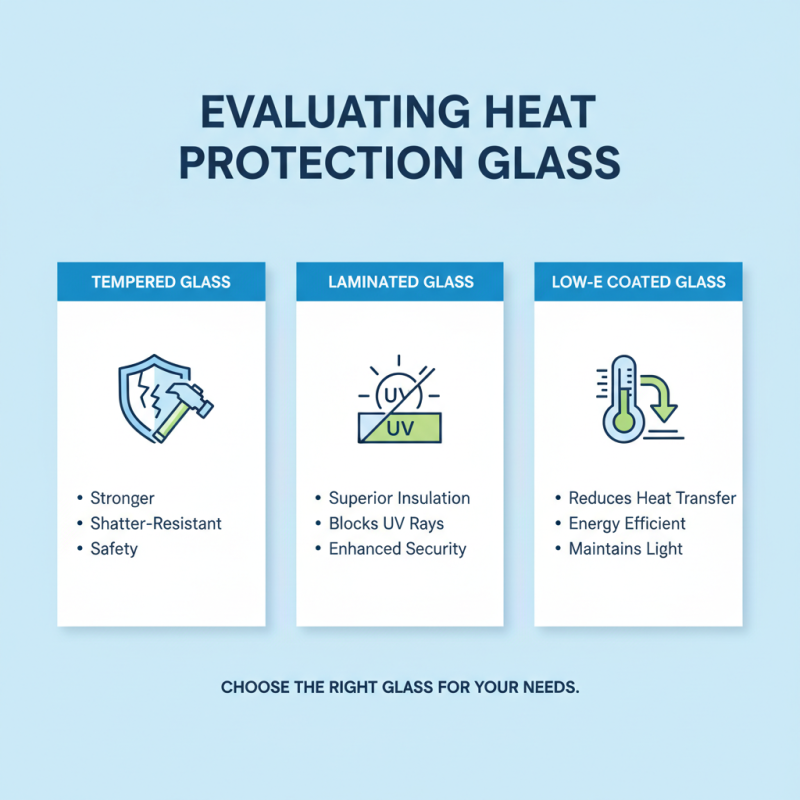
When selecting heat protection glass, it’s essential to understand the various options available. There are several types, each catering to different needs. For instance, tempered glass provides safety by being stronger and shatter-resistant. Laminated glass, on the other hand, offers superior insulation properties and can block UV rays effectively.
It's important to consider your specific environment. Will the glass be exposed to extreme temperatures? If so, you may need specialized glass that can withstand higher heat without compromising its integrity. Think about energy efficiency as well. Certain heat protection glasses can significantly reduce energy consumption by maintaining indoor temperature.
Tips: Always consult a professional to ensure the glass meets safety standards. Take time to assess your needs thoroughly. Sometimes, the best choice isn’t immediately clear. Testing samples can also aid in decision-making.
Keep in mind that installation quality affects performance. Poor installation can lead to issues, even with the best glass. Consider hiring experienced professionals who specialize in heat protection solutions. Their expertise can save you from future headaches.
Considering Essential Factors for Selecting Heat Protection Glass
Choosing the right heat protection glass requires careful consideration of several key factors. One important aspect is the thermal resistance. It determines how well the glass can withstand high temperatures. Look for materials designed for extreme environments. These options can be crucial in industries such as manufacturing and welding.
Another factor is the glass thickness. Thicker glass typically offers better protection and durability. However, it can also add weight, which might not be suitable for all applications. It's essential to weigh the benefits against potential challenges. The visibility factor is also significant. Some processes may require clear visibility, which can be affected by the type of glass chosen.
Pay attention to installation and maintenance needs as well. Some types of heat protection glass may require specialized installations. This can affect costs and timeframes. Rely on recommendations from professionals in the industry to make informed decisions. Balancing these crucial factors will guide you in selecting appropriate heat protection glass for your specific needs.
Comparing Costs and Performance of Heat Protection Glass Options
When selecting heat protection glass, understanding costs and performance is crucial. Each type of glass offers unique benefits, but prices can vary significantly. Generally, tempered glass is more affordable but may not offer the same level of insulation as other options. Laminated glass, while more expensive, can provide superior protection. This choice depends on your specific requirements.
Tips for choosing the right glass include assessing your environment. Consider where the glass will be installed. For high-temperature areas, investing in high-performance glass is crucial. Think about both thermal resistance and durability. Not all options are created equal; some may fail under certain conditions.
Evaluate the long-term savings of each type. A more expensive glass might save you costs on energy over time. Look into any warranty offered as indicators of durability. If funds are limited, weigh cheaper options against their lifespan. Often, lower initial costs lead to higher replacements, negating savings. Reflecting on these choices can lead to a more informed decision.
Comparing Costs and Performance of Heat Protection Glass Options