inquiry
Leave Your Message

2026 Best Glareless Glass Types for Global Buyers

As global buyers plan projects for 2026, choosing the right Glareless Glass requires more than comparing surface appearance or advertised light transmission. Glare control affects comfort, visibility, energy use, cleaning, and long-term maintenance. A bright showroom window may look impressive, yet create distracting reflections across a desk, display case, or digital screen. Different glass types solve different problems. Anti-reflective coated glass can preserve clarity, while acid-etched or matte glass can soften harsh reflections. Laminated solutions may also improve safety and acoustic performance, but they can alter color perception and edge appearance.

Performance depends on more than the glass itself. Building orientation, sunlight angle, interior lighting, screen position, humidity, and cleaning methods all influence real-world results. Small details matter. A sample viewed indoors may not represent a south-facing façade at noon. Buyers should request measurable data, including visible light transmission, reflectance, haze, durability testing, and coating maintenance requirements. Independent laboratory reports and manufacturer quality records deserve careful review. It is not magic.

This guide examines the leading Glareless Glass options expected to interest international buyers in 2026. It considers architectural glazing, display applications, office interiors, retail environments, and specialized furniture. Some recommendations may not suit every climate or budget. That limitation is important. Product availability, certification systems, warranty terms, and installation practices vary between markets. A reliable decision balances visual comfort with verified performance, local technical support, and realistic lifecycle costs. The best glass is not always the least reflective; it is the option that performs consistently in its intended setting.
2026 Best Glareless Glass Types for Global Buyers

Understanding Glareless Glass and Its Core Optical Functions

Glareless glass is not one fixed material or a promise of zero glare. The term describes glass designed to reduce distracting reflections or soften their visual impact. For global buyers, that distinction matters. A micro-etched surface scatters reflected light, making bright reflections less defined. The trade-off can be increased haze, which may soften fine details. Anti-reflective coatings work differently: carefully designed layers reduce reflected light through optical interference. They can preserve a clearer view, but performance depends on the glass, coating, and viewing conditions. Different problems need different solutions.

These functions affect daily use. On a shop display, reduced reflections can make products easier to see under ceiling lights. On an information screen, excess haze may blur small text. That is the compromise. Glass thickness, tint, surface treatment, and viewing angle can all change the result. Lighting matters, too: a strong lamp reflected at eye level may remain distracting even with treated glass. Buyers should compare samples in the actual setting, checking both reflection and image clarity. Ask for measured reflectance and haze data, and confirm how the figures were tested. The label “glareless” alone is not enough; sometimes it promises more than the surface can deliver.

Comparing Anti-Glare, Anti-Reflective, Tinted, and Low-E Glass Types

For global buyers, “glareless” glass is not one product. It describes different ways to control harsh reflections and bright daylight. Anti-glare glass uses a textured or etched surface to scatter reflected light. It suits display cases, interior partitions, and areas with strong overhead lighting. The surface can look slightly hazy, especially beside a sharp window view. Glare is not heat.

Anti-reflective glass uses optical coatings to reduce surface reflection and preserve image clarity. It works well for museums, retail windows, and façades where color accuracy matters. Coating durability, cleaning methods, and viewing angle deserve careful review. Tinted glass absorbs selected wavelengths, lowering brightness and solar gain while adding visible color. Gray, bronze, and blue tones can change how products and interiors appear. Tint may reduce glare, but it does not remove reflections completely.

Low-E glass mainly manages radiant heat and ultraviolet transmission through a microscopically thin coating. It can improve energy performance, yet it is not automatically a glare-control solution. Pairing Low-E with suitable tint or exterior shading may perform better in sunny climates. Buyers should compare visible light transmittance, exterior reflectance, solar heat gain coefficient, and coating position. Request full-size samples, not only small swatches. Samples can mislead. A small pane rarely shows evening reflections, nearby buildings, or screen glare. In my project reviews, the strongest specification matched climate, façade orientation, cleaning access, and occupant needs. There is no universal winner; clear glass can still create uncomfortable reflections at 3 p.m.

2026 Best Glareless Glass Types for Global Buyers

Typical visible light transmittance (VLT) ranges for comparing anti-glare, anti-reflective, tinted, and Low-E glass.

Anti-reflective coatings generally preserve more transmitted light, while tint and Low-E options span wider ranges. Anti-glare glass reduces specular glare through surface diffusion; its VLT depends on the underlying glass. These are indicative specification ranges, not universal limits—actual performance varies with product, coating, tint, thickness, and configuration.

Matching Glareless Glass to Climate, Building Use, and Viewing Needs

Glareless glass is not one universal product; the right choice depends on sun exposure, viewing distance, and room function. In hot, bright climates, solar-control glass can reduce harsh daylight and solar heat gain. External shades also help when low morning or afternoon sun reaches a screen. Choose tint carefully. Too much tint can mute indoor colors and increase daytime electric-light use. In cold regions, low-emissivity glass limits heat loss, but may not stop glare from a low winter sun. Orientation matters more than a climate label alone. Check samples in real daylight.

Offices with monitors often benefit from low-reflection coatings, especially beside bright sky or water. Yet coatings may show fingerprints or shift reflected colors at oblique angles. For galleries and shopfronts, high-transmission anti-reflective glass keeps objects clear; diffusing glass adds privacy but softens detail. It varies. On façades, laminated or insulated units can address safety, sound, and thermal needs; specify those functions separately from glare control. Ask for measured visible-light transmission and reflectance, then compare a full-size mock-up at its actual viewing angle. Test outdoors. A single test result can mislead.

Evaluating Performance, Safety, Durability, and Maintenance Standards

2026 Best Glareless Glass Types for Global Buyers

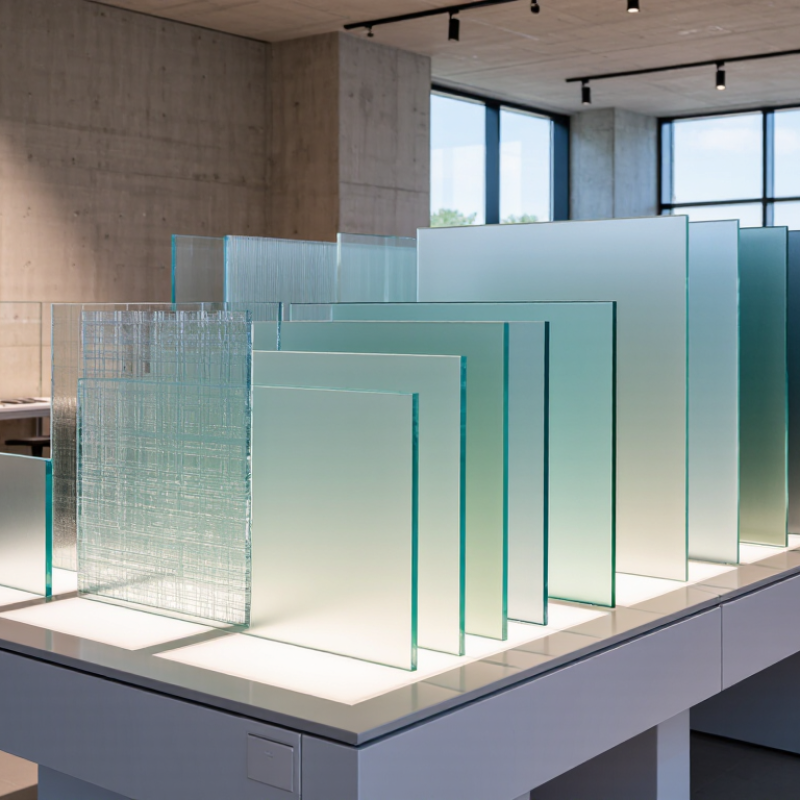
Glareless glass should be judged under real lighting, not only in a showroom. Acid-etched glass diffuses harsh reflections and supports privacy, but fingerprints can appear quickly. Matte laminated glass reduces visual sparkle while retaining useful daylight. Low-reflection coated glass offers clearer views, especially near screens and bright windows. Its performance depends on viewing angle, coating quality, and installation accuracy.

Safety remains non-negotiable. Tempered glass resists thermal shock and breaks into smaller fragments. Laminated glass holds broken pieces together after impact. For doors, partitions, and overhead areas, buyers should request tested safety data. Check visible light transmission, haze, impact resistance, and ultraviolet filtering. Ask for independent laboratory reports, not vague marketing claims.

Durability depends on climate and cleaning habits. Salt air, dust, and strong sunlight can expose weak coatings sooner than expected. Use soft microfiber cloths, clean water, and neutral detergents. Abrasive pads may create permanent marks. Coated surfaces need special care.

Small details matter.

Inspect edges, seals, and drainage paths during installation. Poor handling can cause chips that later become cracks. Maintenance schedules should match the building’s exposure, not an assumed global average. A product may perform well in a dry office but disappoint beside a humid coast. I would also question any “maintenance-free” promise. Even good glareless glass needs inspection, careful cleaning, and occasional performance review.

Selecting Global Suppliers, Certifications, Costs, and 2026 Trends

For 2026 projects, glareless glass selection should begin with the building’s light conditions, not a supplier’s catalogue. Acid-etched glass softly scatters sunlight and hides harsh reflections. Low-reflection coated glass preserves clearer views but usually requires tighter handling controls. Laminated glass with an interlayer can reduce glare, noise, and injury risks in shared spaces. Electrochromic glass offers adjustable shading, although its controls and maintenance deserve careful evaluation. No option is perfect.

Global buyers should request physical samples, optical data, and recent test reports before approving production. Compare visible light transmittance, reflectance, haze, color shift, thermal performance, and coating durability. A sample near a west-facing window reveals more than a studio photograph. Check supplier experience with export packing, edge protection, moisture control, and replacement procedures. Certifications may include ISO 9001, ISO 14001, CE, UKCA, ASTM, or regional equivalents, depending on the destination and application. Verify certificate scope and validity independently.

Cost comparisons must include processing, inspection, packaging, freight, tariffs, installation, and possible rejects. Etched products may offer a lower initial cost, while smart glass can reduce cooling demand over time. In 2026, buyers are increasingly requesting recycled content, environmental product declarations, lower-carbon manufacturing, and digital quality records. These claims need evidence. Suppliers sometimes provide impressive percentages without clear boundaries. That should prompt questions, not immediate approval. Lead times also matter, especially for custom sizes, colored interlayers, and replacement panels. Jiova