
Leave Your Message
Modern maritime navigation relies heavily on sophisticated electronic display systems. The ship navigation bridge serves as the central command post of any vessel, from massive container ships to luxury passenger liners and military vessels. Within this environment, screens displaying Electronic Chart Display and Information Systems (ECDIS), RADAR, sonar, engine metrics, and autopilot parameters are running continuously. However, the optical conditions on a ship's bridge are notoriously hostile.
During the day, intense, direct sunlight floods the bridge from multiple angles, creating blinding specular reflections on display screens. At night, internal instrumentation lights reflect off the glass surfaces, distracting watch officers and compromising their night vision. To solve these critical challenges, the integration of Anti-Glare (AG) and Anti-Reflection (AR) surface treatments has transitioned from a premium upgrade to an absolute regulatory and safety requirement. Combining AG with AR reflection reduction ensures that critical navigation details remain visible under all ambient lighting conditions, preventing accidents and streamlining vessel operations.
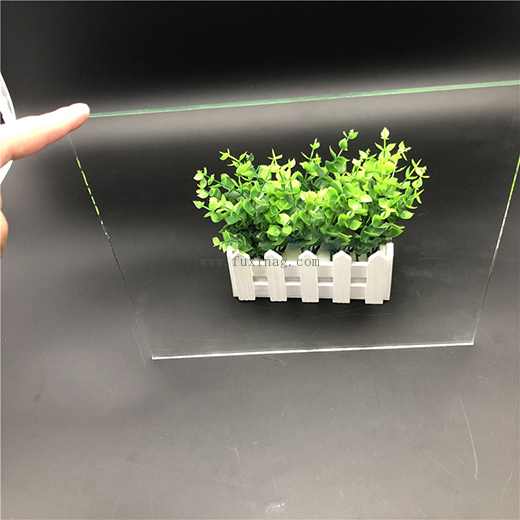
Using only Anti-Glare (AG) glass can sometimes cause a slight loss in image sharpness and contrast, especially when rendering fine text on electronic charts. Conversely, using only Anti-Reflection (AR) coatings does not prevent the blinding reflection of direct sunlight rays. The synergy of AG with AR combines the scattering properties of AG with the destructive light interference of AR, achieving less than 0.5% reflection while maintaining ultra-sharp image clarity.
To appreciate the effectiveness of combined AG and AR coatings, it is helpful to look at the optical physics of both technologies:
Anti-Glare glass is produced by altering the surface profile of the glass on a microscopic level. This is typically achieved through chemical etching (acid etching) or high-durability spray coatings. When incident light hits the micro-rough surface of the AG glass, the light is scattered in multiple directions (diffuse reflection) rather than reflecting directly back into the observer's eyes (specular reflection). This effectively eliminates the "mirror effect" of bright light sources, such as overhead bridge lighting or the sun low on the horizon.
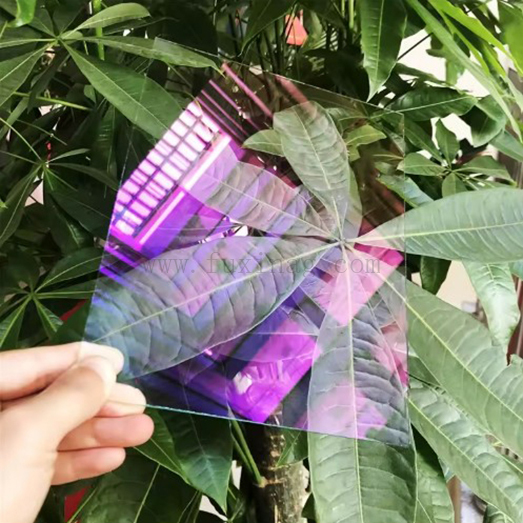
Anti-Reflection coatings consist of multiple nanometer-thin layers of metal oxides (such as silicon dioxide and titanium dioxide) deposited onto the glass surface via vacuum sputtering or physical vapor deposition (PVD). The thickness and refractive indices of these layers are precisely calculated so that light waves reflecting off the outer boundary of the coating and those reflecting off the glass interface are 180 degrees out of phase. This causes the light waves to cancel each other out (destructive interference), drastically reducing reflection and boosting light transmission through the glass to over 98%.
When these two technologies are combined on a single cover glass, they create the ultimate marine optical filter. The AG treatment disperses concentrated glare, while the AR coating maximizes light throughput from the display panel underneath. This combination ensures that contrast ratios remain high, colors remain accurate, and the display is highly readable even when viewed from wide angles—a common necessity on ship bridges where multiple crew members must monitor the same screen.
The global maritime display market is undergoing rapid evolution. With the International Maritime Organization (IMO) mandating the transition from paper charts to ECDIS, the demand for high-performance marine displays has surged. Marine display manufacturers must comply with strict international standards, such as IEC 60945 (which specifies general requirements for marine navigation equipment) and IEC 61174 (ECDIS standards).
Commercially, fleet operators are focusing on improving crew efficiency and reducing fatigue. Watchkeepers often spend hours looking at screens; optical strain caused by constant glare and reflection is a primary contributor to fatigue-induced navigation errors. Consequently, shipbuilders and system integrators are specifying AG+AR treated cover glass for all bridge console upgrades. In addition, the shift towards larger, multi-touch screens (often up to 32 inches or larger) requires chemically tempered, high-durability glass that can withstand physical impact, salt-spray exposure, and continuous cleaning without degrading the optical coatings.
The application of AG with AR reflection reduction glass spans across several critical display units located on a modern ship bridge:
Manufacturing glass for marine navigation displays presents unique engineering challenges that only experienced deep-processing specialists can address:
Standard optical coatings can quickly degrade when exposed to saline air and sea spray. The salt ions chemically attack the thin metal oxide layers of AR coatings, leading to peeling or clouding. To counter this, Fuxin Glass utilizes advanced vacuum deposition techniques and custom protective top-coats that pass strict environmental testing, including salt spray tests (ASTM B117) and high-humidity exposure, ensuring a service life exceeding a decade in open-sea conditions.
Modern marine displays are increasingly interactive, utilizing Projected Capacitive (PCAP) touch sensors. The cover glass must be thin enough to maintain touch sensitivity while being chemically tempered to provide high impact resistance. Furthermore, the AG surface must have a controlled gloss level (typically between 50 to 90 gloss units) to ensure a smooth tactile feel for touch operations without causing optical distortion (sparkle) on high-resolution panels.
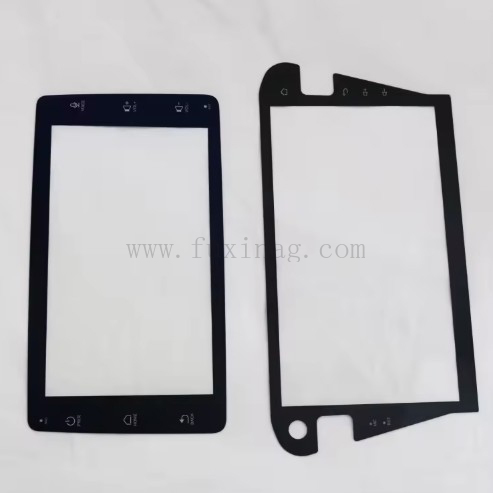
Marine bridge consoles often feature integrated, sleek glass designs where multiple displays are housed behind a single, continuous sheet of glass. This requires complex CNC cutting, irregular shape edging, and high-precision silk screen printing for borders, icons, and branding. Fuxin Glass leverages its 13+ years of OEM/ODM experience to provide fully customized cover glass solutions that meet these precise architectural requirements.
Founded in 2012, registered capital $1.5 million & 21000+m² plant, Fuxin Glass is an ODM/OEM provider for glass deep-processing service over 13 years, accumulating rich industry experience. We process base glass into customized cover glass with AG/AR/AF/AM surface coating and silk screen printing for touch screen, smart control devices, home appliances, lighting, and other special optical applications.
Our factory is near the beautiful Wanlv Lake, Heyuan City, China. The factory boasts a comprehensive suite of precision glass processing equipment, including glass tempering lines, fully automatic CNC cutting and edging lines, a large-scale screen printing line, linear and custom-shaped edging machines, and AG, AF, AR, and Anti-bacterial glass spraying.
Leveraging a strong R&D and sales team, production capacity, and a stable supply chain, Fuxin Glass has grown to become one of China's top 3 electronic and electrical cover glass manufacturers and enjoys a global reputation. We maintain stable partnerships with many renowned global brands, including TCL, HKC, CVTE, OKV, HUAWEI, KONKA, SEEWO. The company has a team of over 50 leading professional technical personnel. Based on the enterprising thinking of building a business with integrity, creating a new future, technological creativity and leading by science and technology, we are constantly innovating. We always adhere to the principle of "integrity, quality and win-win" and are willing to establish good long-term cooperative relationships with customers all over the world!
Fuxin Glass will give you quality and service that goes far beyond anyone else
Our factory has 13-year of OEM/ODM experience in precision glass processing.
Certified with ISO, RHOS, GS, and JIS Z standards to guarantee international quality compliance.
We provide 24-hours Professional after-sale service to ensure seamless project execution.
Specializing in the research, design, production, and sale of electronic display glass.
Fuxin Glass owning a leading R&D team which combines of a total of 50 professional engineers.
Top 3 A-share listed electronic display glass manufacturer in China.
Professional manufacturer of AG glass, AM glass, AR glass, AF glass, and various electrical glass.
Our Customers: continuous cooperation over decades with the well known customers, including TCL, BOE, CVTE, Hisense, HKC, HUAWEI and etc.