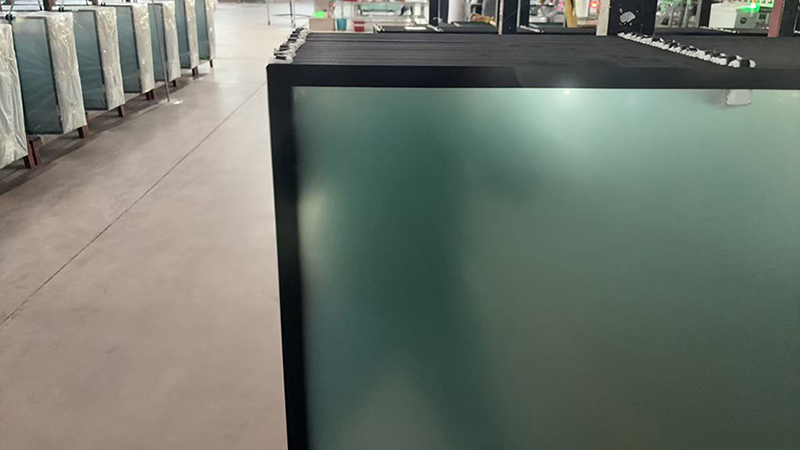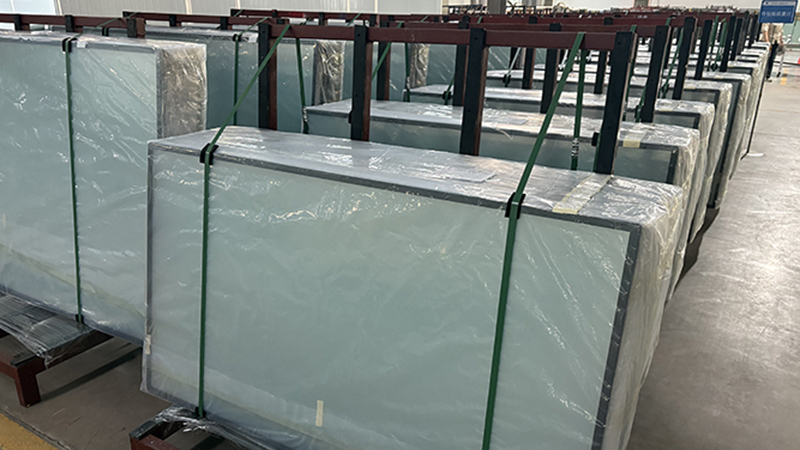
Fuxin Glass supports various silk screen customization services, including Customized patterns and logos: High definition printing of brand logos, decorative designs, and informational graphics. Functional and decorative printing: from indicator icons and scale markings to artistic patterns and texture effects.
01. Pre-treatment
● Cleaning: Use an ultrasonic cleaner or dedicated cleaning line, combined with deionized water and neutral or slightly alkaline cleaning agents, to thoroughly remove grease, dust, and particulate matter from the glass surface. This is the first and crucial step in ensuring ink adhesion.
● Drying: Dry in a dust-free environment to ensure the glass surface is completely clean and dry.
● Static elimination: Use an ion blower to remove static electricity from the glass surface and prevent dust adhesion.
● Coating Adhesion Promoter (Optional): For certain specialty inks or high-performance products, a transparent primer may be screen-printed first to enhance the bonding strength between the ink and glass (especially tempered glass surfaces).
02. Screen Printing
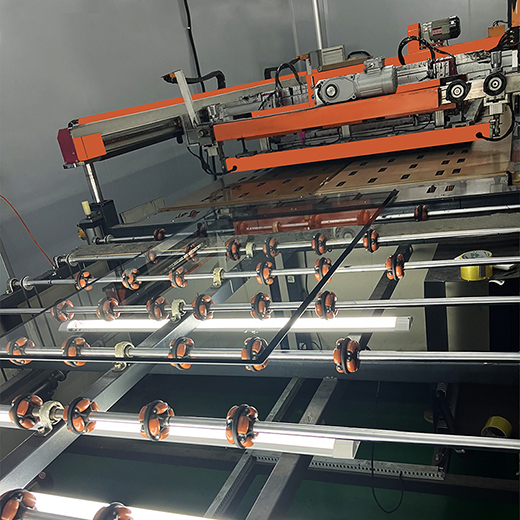
This is the most crucial step, as modern production typically uses fully automatic high-precision screen printing machines.
Screen setup
● Mesh: Use high mesh (such as 300-500 mesh) stainless steel or polyester mesh to ensure the sharpness and precision of the printed edges.
● Photographic adhesive: Apply photosensitive adhesive on the screen, expose and develop it with ultraviolet light, and form a hollow pattern that is completely consistent with the frame design.
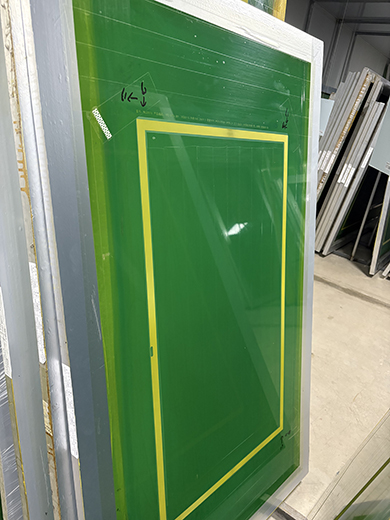
Ink preparation
● Type: Mainly uses glass glaze ink or resin ink. After high-temperature curing, this ink firmly binds with the glass substrate and has excellent wear resistance, acid and alkali resistance, and weather resistance.
● Color: The most common is black (used for masking), there are also white (used to improve the contrast of the LCD inside the frame), various colors, and ink with a metallic like color.
● Characteristics: The viscosity, thixotropy, and fineness of the ink need to be precisely controlled to adapt to high-precision printing.
Printing process
● Positioning: The glass is precisely placed on the fixture (fixture) through a robotic arm or conveyor belt. There is usually a positioning PIN or vacuum suction on the fixture to ensure positional accuracy (error is usually within ± 0.05mm).
● Alignment: The machine vision system (CCD camera) automatically recognizes the positioning marks (Mark points) on the glass and fine tunes the position of the screen or glass to achieve precise overprinting.
● Printing: A scraper is used to scrape the screen at a set pressure, angle, and speed, transferring ink through the hollow pattern onto the glass surface. Border printing usually requires printing multiple times (2-3 times) to achieve sufficient coverage and color saturation.
● One drying (leveling): After printing one layer, it will enter a low-temperature (such as 80-120 °C) drying oven to preliminarily level the ink and evaporate some solvents, preparing for the next layer of printing.
03. Curing
● High temperature curing (sintering): For glass glaze ink, it needs to be carried out in a high-temperature sintering furnace. The temperature curve is precisely controlled (peak temperature usually between 600 °C and 720 ° C) to melt the glass powder in the ink and fuse with the surface of the substrate glass, forming a hard, dense, and durable coating. This process is often referred to as "baking" or "sintering".
● Low temperature curing (UV/thermal curing): For certain resin based inks, medium low temperature (120 ° C-150 ° C) thermal curing or ultraviolet (UV) curing is used.
04. Post processing&Inspection
● Cleaning: Clean the surface again to remove any possible residues.
● Quality inspection:
Appearance inspection (AOI automatic optical inspection): Use a high-resolution camera to automatically check the printing position accuracy, width consistency, and whether there are defects such as missing prints, ink overflow, dirty spots, bubbles, scratches, etc. of the border.
Color detection: Use a colorimeter to measure whether the color is consistent with the standard sample.
Adhesion test: Conduct a hundred grid test and tape peeling test to ensure the ink is firm.
Durability testing (sampling): testing reliability such as abrasion resistance, alcohol resistance, sweat resistance, high temperature and high humidity resistance.