




The method of inspecting physical tempering in the production of cover glass
Two main inspection methods
| Inspection Method | Name | Core measurement indicators | Main tools/standards | Characteristics and Explanation |
| Non-destructive testing | Surface stress testing | Surface compressive stress value (such as ≥ 90MPa or 95MPa), stress uniformity | Surface stress gauge (such as photoelastic scanning method) | The most fundamental quantitative method. Take multiple measurements in the area 20mm away from the edge to directly reflect the tempered strength. |
|
Surface thrust test |
The force required to flatten the curved glass | Thrust meter, specific vehicle, and metal wire | A simple mechanical test on the production line of large monitor cover glass, indirectly reflecting the tempering stress. | |
|
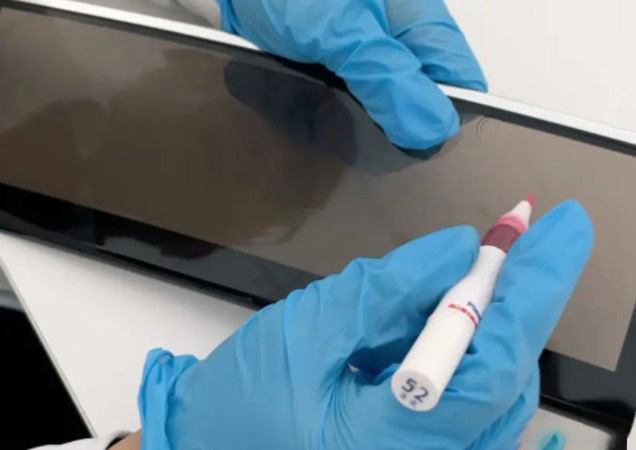
Polarized mirror inspection |
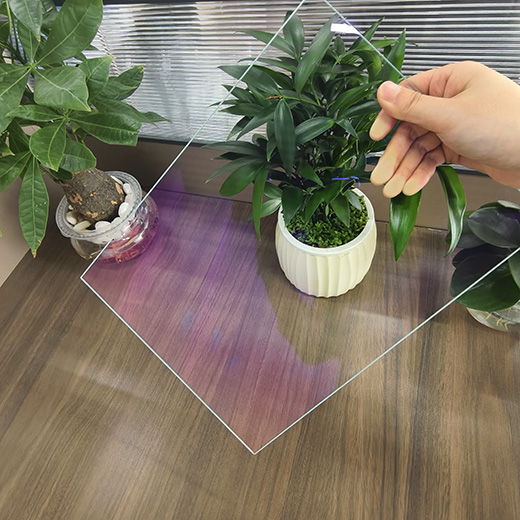
Observing stress induced iridescence (interference fringes) | Polarizing glasses (polarized sunglasses) | Rapid qualitative method. The dense and regular stripes usually indicate good tempering, but not precise enough | |
| Destructive testing | Impact resistance test | impact resistance | Ball impact testing machine | If a 1040g steel ball falls freely from a height of 1m without penetrating damage. |
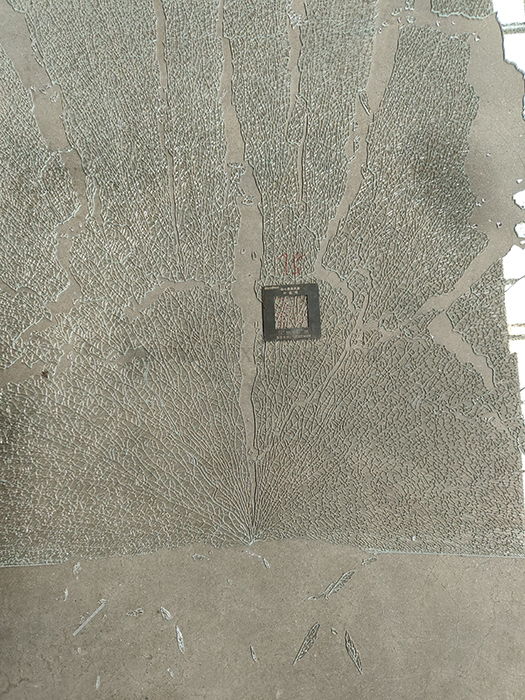
| Fragment state test | Shape, size, and quantity of broken fragments | Sharp hammer, high-speed camera, grid | Key safety indicators. If the number of fragments within 50mm × 50mm is ≥ 40 (when the thickness is ≤ 3.5mm). | |
| Bending strength test | Bending strength and fracture modulus | Universal material testing machine (four point bending) | Evaluate mechanical strength. | |
| Heat shock resistance test | thermal stability | High and low temperature test chamber | If there are no cracks after withstanding the impact of a temperature difference of -40 ℃ to 150 ℃. |
Inspection standards and operational recommendations
In practical operation, in order to systematically and reliably evaluate the quality of tempered steel, the above methods are usually combined and followed according to relevant standards:
Following authoritative standards: Domestic production is mainly based on GB 15763.2 "Safety Glass for Building Use Part 2: Tempered Glass". Other commonly used standards include GB/T 18144 (stress testing), GB/T 9963 (impact resistance), etc.
Clear qualification threshold: For cover glass, key indicators need to meet standard requirements, such as surface compressive stress usually requiring ≥ 90MPa, and impact resistance and fragmentation state also need to meet corresponding regulations.
Establish a monitoring process: It is recommended to make surface stress testing a mandatory inspection item for each batch or regular sampling; Impact resistance and fragmentation testing can be used as type testing or process validation; Polarized mirror inspection can be used for rapid screening of production lines.
Below image shows, 75-inch 4mm cover glass broken under 1040mm drop ball at our plant: 75 pcs fragements within 50mm*50mm frame.