






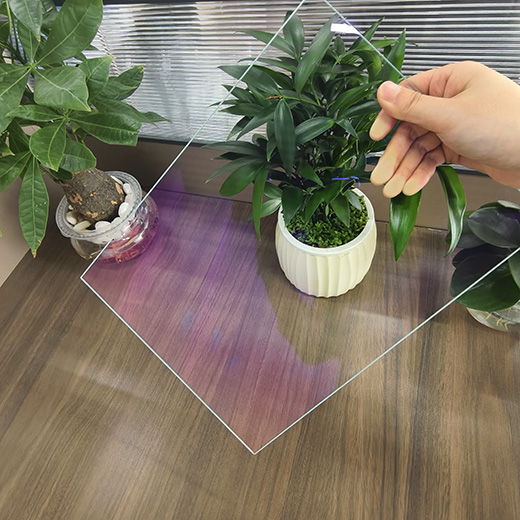
Precision Humidity Control: The Unsung Hero in Touch Panel Cover Glass Production
The Hidden Cost of Uncontrolled Humidity
During production, ambient moisture is a primary culprit behind several costly defects:
-
Condensation on Surfaces: Water vapor settling on pristine glass surfaces before coating or laminating processes leads to adhesion failures, bubbles, and optical distortions.
-
Chemical Contamination: Many cleaning and coating solutions are hygroscopic. Moisture absorption alters their chemical composition, resulting in inconsistent application, hazing, and reduced coating durability.
-
Corrosion of Sensitive Components: Metallic traces, connectors, and assembly elements can begin to oxidize, leading to long-term reliability issues in the final display module.
Perhaps the most critical phase is post-production storage and handling. Storing finished or semi-finished cover glass in a humid environment invites disaster. Microscopic moisture absorption can weaken the glass structure over time, increase susceptibility to cracking during assembly, and foster mold growth on packaging materials, rendering products unsellable.
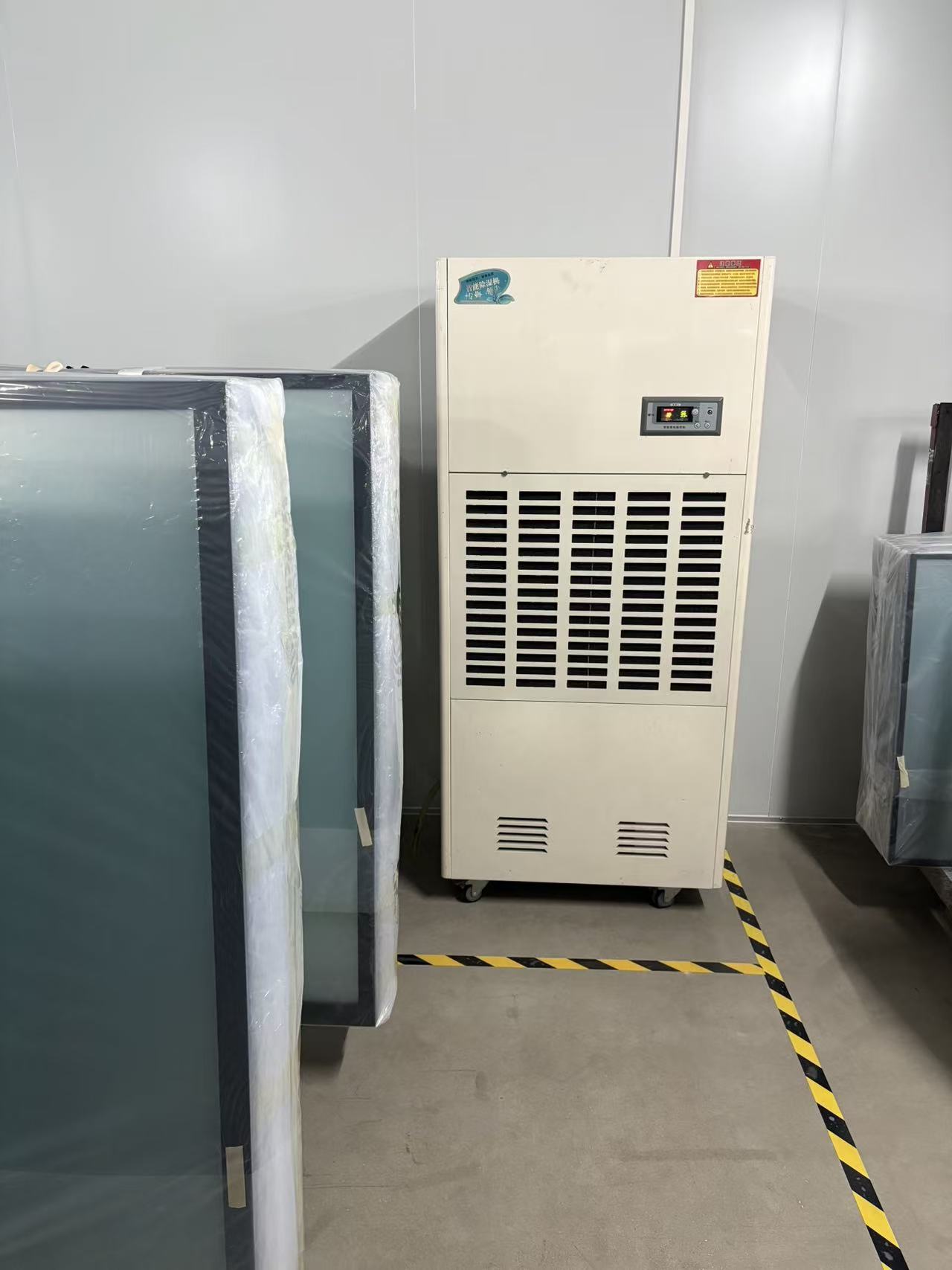
How Precision Dehumidification Secures the Production Chain
Implementing a dedicated desiccant dehumidifier system within production and storage areas provides a stable, ultra-dry environment, typically maintaining dew points as low as -40°C to -20°C. This proactive control delivers transformative benefits:
-
Dramatically Enhanced Product Yield: By eliminating moisture-related defects at the source, manufacturers see a significant drop in scrap and rework rates. This directly translates to higher output of first-quality glass and improved operational margins.
-
Guaranteed Coating & Lamination Integrity: A bone-dry environment ensures that all bonding processes—from anti-reflective coatings to OCAs (Optically Clear Adhesives)—achieve perfect, durable adhesion without bubbles or delamination.
-
Superior Long-Term Reliability: Glass and associated components stored in a controlled humidity environment are preserved in an inert state, free from corrosion or degradation. This extends shelf life and ensures the final product performs flawlessly for the end-user.
-
Optimized Production Efficiency: Consistent environmental conditions allow for predictable process parameters, reducing downtime for adjustments and accelerating throughput.
For manufacturers aiming to eliminate moisture-related defects, protect our capital investment in raw materials, and build a reputation for flawless quality, mastering the environment is the final, crucial step.