


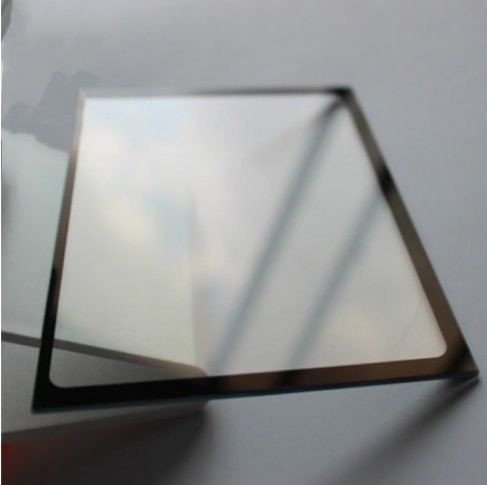

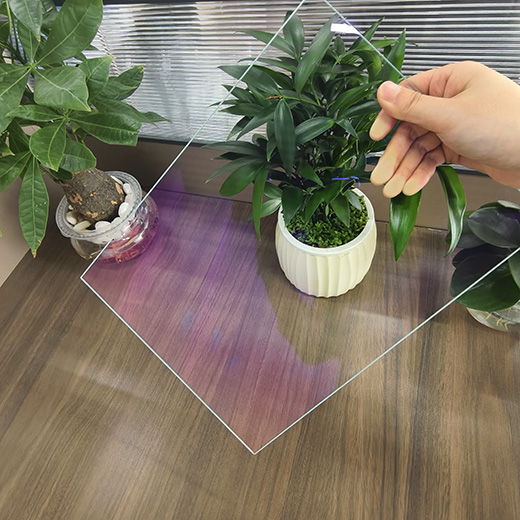
How is the black bezel of cover glass of a touchscreen silkscreen printed?
Step 1: Glass Substrate Preparation
- Cleaning: Thoroughly remove grease, dust, and impurities from the glass surface using methods such as ultrasonic cleaning or plasma cleaning. This is fundamental to ensuring ink adhesion.
- Pretreatment: Sometimes, a primer or chemical treatment is used to enhance the glass surface energy.
Step 2: Screen Printing
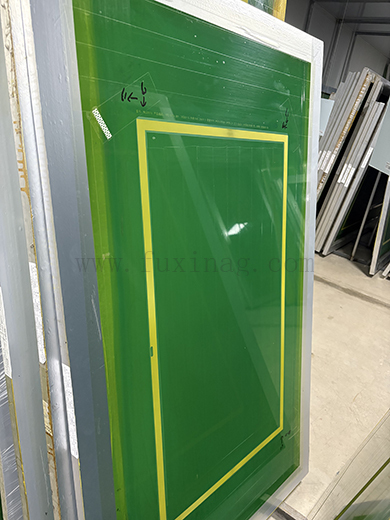
- This is the core tool of screen printing. Based on the border design drawings (usually CAD files), a high-precision screen printing stencil is created.
- Key screen printing parameters: mesh count (determines ink throughput and line fineness), tension, photosensitive emulsion thickness, etc. Frame printing typically requires a high mesh count screen to achieve fine edges.
Step 3: Ink Mixing
- The black border ink is not ordinary paint, but a specially developed glass ink. Its main components include:
- Resin/Binder: Typically epoxy resin or polyurethane system, providing adhesion, hardness, and toughness.
- Pigment: High-blackness inorganic pigment (such as black ceramic pigment), requiring strong hiding power and uniform, stable color.
- Solvent: Adjusts the ink viscosity to make it suitable for printing.
- Additives: Improve leveling, abrasion resistance, chemical resistance, etc.
- The viscosity and thixotropy of the ink need to be precisely controlled to ensure a clear, non-spreading printed pattern.
Step 4: Screen Printing
- Precisely position the glass substrate on the printing press table.
- The screen is lowered to a certain distance from the glass surface (screen distance).
- The squeegee scrapes across the screen at the set pressure, angle, and speed, transferring ink through the graphic area on the screen onto the glass surface.
Step 5: Pre-drying/Leveling
After printing, the glass enters a low-temperature drying tunnel (approximately 80-150℃) to allow some of the solvent in the ink to evaporate, enabling the ink to initially cure and level, forming a uniform film. This step prevents subsequent operations from damaging the pattern.
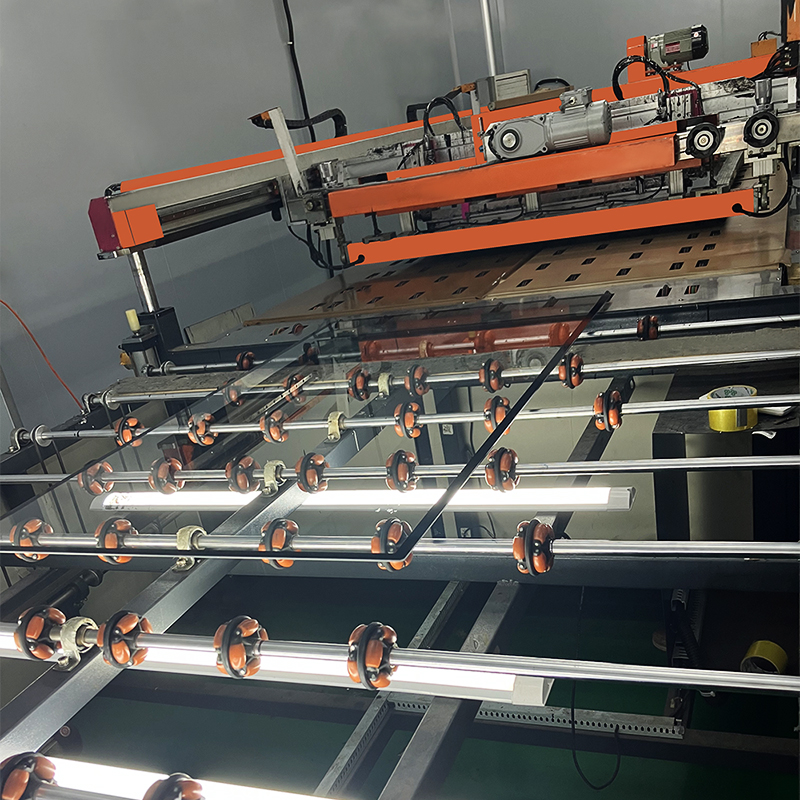
Key Technologies and Challenges
1. High-Precision Alignment: The frame must be perfectly aligned with the glass contour and subsequent layers (touch sensors, display screen), with an error typically within ±0.1mm. This requires a high-precision vision alignment system and a stable machine.
2. Edge Smoothness and Uniformity: The frame edges must be sharp, jagged, and burr-free. The ink film thickness must be uniform, free from defects such as orange peel, pinholes, and bubbles.
3. Ink Performance: In addition to basic blackness and adhesion, the following are also required:
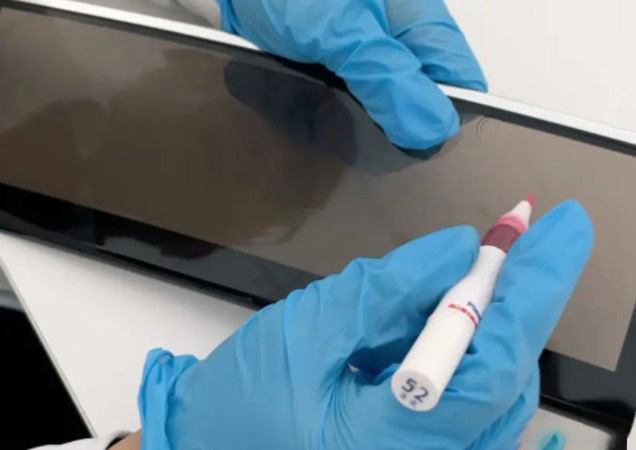
- High hardness (typically requiring ≥6H pencil hardness) to resist scratches.
- Excellent weather resistance: Resistant to UV radiation, high temperature, and high humidity without discoloration.
- Good chemical resistance: Resistant to corrosion from sweat, detergents, cosmetics, etc.
4. "Contour Printing": For 2.5D or 3D curved glass, screen printing becomes significantly more difficult. Flexible screens or special curved surface printing equipment are required to ensure uniform ink adhesion even on curved surfaces.