Leave Your Message
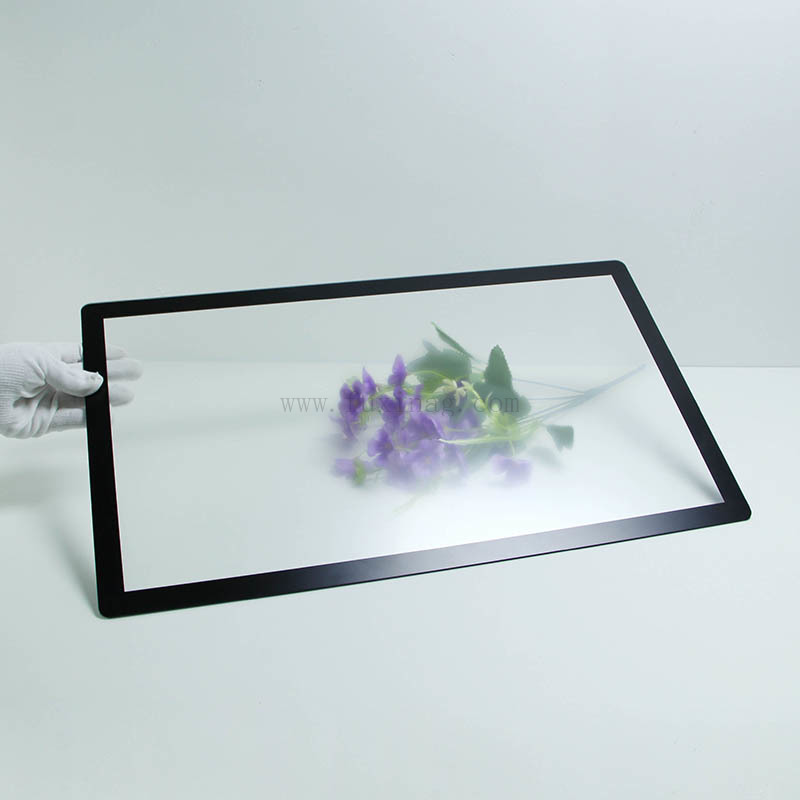
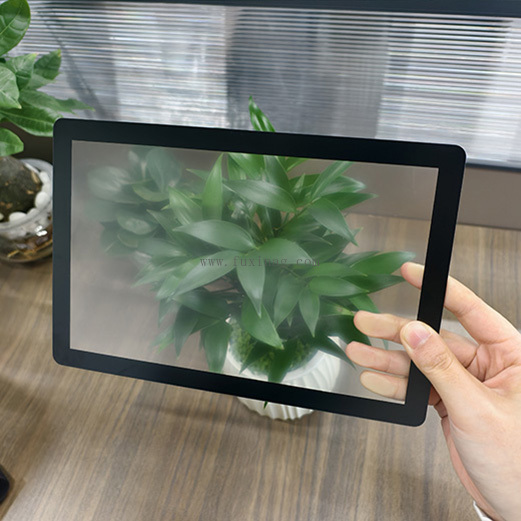
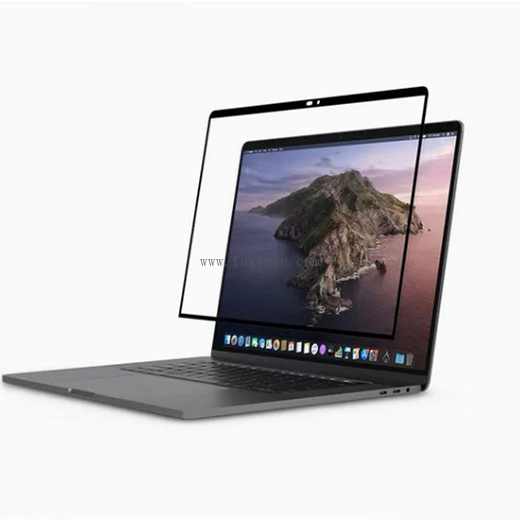
Explore our top-tier protective glass engineered specifically for high-performance gaming monitors, ensuring zero glare and maximum durability.
In the hyper-competitive realm of electronic sports (e-sports), every single millisecond counts. The visual interface between the player and the game—the monitor—serves as the most critical hardware component in a professional gaming setup. As graphics processing units (GPUs) continuously push frame rates into the high hundreds, the physical display must keep pace not only in electronic refresh rates but also in pure optical clarity. This is precisely where Low-Glare Protective Glass for E-Sports Gaming Monitors emerges as a paramount, game-changing technology.
Standard monitor glass often acts like a mirror in brightly lit environments, reflecting ambient light, stage spotlights, or even RGB peripherals back into the player's eyes. This phenomenon, known as glare, significantly degrades the contrast ratio, washes out crucial on-screen details, and causes immense eye fatigue over prolonged gaming sessions. For a professional gamer, losing sight of an opponent hiding in a dark corner of the map due to a stray reflection can mean the difference between a championship victory and a devastating defeat.
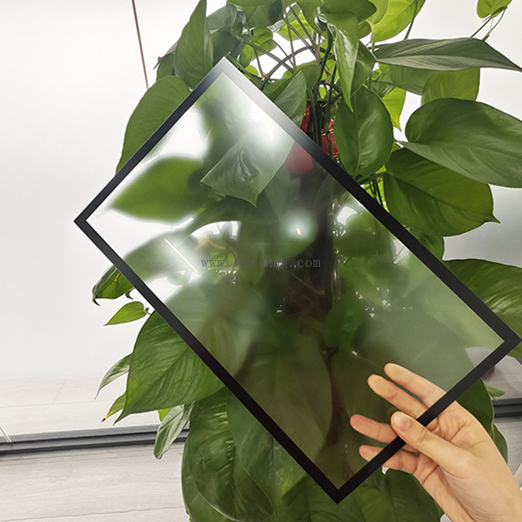
Low-glare (Anti-Glare or AG) protective glass is meticulously engineered to diffuse incident light. By altering the surface topography of the glass at a microscopic level—often through advanced chemical etching processes—the glass scatters reflected light rather than bouncing it directly back to the viewer. This ensures that the vivid colors, deep blacks, and hyper-fast motion rendered by the monitor remain perfectly visible from any angle, under any lighting condition, giving players the ultimate competitive edge.
The global e-sports industry has transitioned from a niche hobby to a multi-billion-dollar commercial juggernaut. Consequently, the industrial supply chain supporting gaming hardware has experienced exponential growth and technological maturation. The manufacturing of Low-Glare Protective Glass is now a highly specialized sector within the optoelectronics industry, requiring massive capital investment, state-of-the-art cleanrooms, and rigorous quality control protocols.
Currently, the market is driven by the demands of top-tier monitor brands (such as ASUS ROG, Alienware, BenQ ZOWIE, and Acer Predator) who require glass panels that offer both extreme durability and flawless optical performance. Industrially, the production of these glass panels involves several sophisticated steps. Base glass is first cut using fully automatic CNC machines to ensure micron-level precision. It is then subjected to tempering processes to enhance its structural integrity, making it highly resistant to impacts—a crucial feature for protective applications.
The anti-glare properties are typically achieved through two primary industrial methods: spray coating and chemical etching. While spray coating is cost-effective, chemical etching has become the gold standard for high-end e-sports monitors. Etched AG glass provides a permanent, scratch-resistant low-glare surface that never peels or degrades over time. Furthermore, the industry is witnessing a massive shift towards integrating multiple coatings on a single panel. It is now common for e-sports monitor glass to feature AG (Anti-Glare) on the front, AR (Anti-Reflective) coatings to maximize light transmittance, and AF (Anti-Fingerprint) treatments to keep the screen pristine.
Commercially, the demand for large-format glass (ranging from 24 inches for competitive FPS gaming to massive 43+ inch panels for immersive RPG experiences) has forced manufacturers to scale up their production lines. Companies that can provide end-to-end ODM/OEM deep-processing services—from raw material sourcing to final multi-coated delivery—are currently dominating the global supply chain.
The application of Low-Glare Protective Glass extends far beyond a typical consumer's bedroom desk. The diverse and demanding environments in which gaming displays are utilized require highly specialized optical solutions. Let us delve deeper into the core application scenarios where this technology is completely indispensable.
Imagine a massive stadium filled with tens of thousands of cheering fans. The stage is illuminated by dynamic, high-intensity LED spotlights, laser shows, and massive broadcast screens. In this environment, traditional glass monitors would be entirely unplayable, acting as mirrors reflecting the chaotic light show. Low-glare glass is mandatory here. It ensures that the intense ambient light is diffused, allowing professional athletes to maintain 100% focus on their high-refresh-rate displays without visual interference. The anti-reflective properties also ensure that broadcast cameras do not pick up monitor glare, providing a better viewing experience for the audience.
Modern gaming setups are characterized by elaborate RGB lighting ecosystems. Keyboards, mice, PC cases, and even wall panels emit vibrant, shifting colors. While aesthetically pleasing, this ambient light can severely impact screen visibility. Low-glare glass mitigates the reflection of these RGB lights. Furthermore, for professional streamers who use bright ring lights and softboxes to illuminate their faces for the camera, AG glass prevents these powerful light sources from creating blinding hotspots on their monitors.
The arcade industry and interactive location-based entertainment centers utilize massive touch-enabled gaming displays (often 55 to 86 inches). These machines operate in brightly lit commercial environments and are subjected to constant physical interaction. Here, the glass must combine Anti-Glare properties with heavy-duty tempering for impact resistance and Anti-Fingerprint (AF) coatings. The AF coating ensures that the glass remains smooth to the touch, reducing friction for rapid swiping motions while resisting the buildup of skin oils and smudges that would otherwise ruin the visual clarity.
As competitive gaming expands into Virtual Reality (VR), Augmented Reality (AR), and high-end portable handhelds, the need for ultra-thin, low-glare protective glass is surging. Handheld gaming devices are frequently used outdoors or under direct sunlight. Premium ultra-thin AG/AR glass (often 0.5mm to 1mm thick) is applied to these portable screens to ensure daylight readability while keeping the device lightweight and highly responsive to touch inputs.
The trajectory of Low-Glare Protective Glass technology is intrinsically linked to the evolution of display panels themselves. As OLED, Mini-LED, and Micro-LED technologies become the standard for e-sports monitors, the protective glass covering them must evolve to complement their incredible contrast ratios and peak brightness levels.
One of the most significant development trends is the push for Ultra-High Transmittance AG Glass. Traditional anti-glare treatments, by virtue of scattering light, can sometimes introduce a slight "sparkle" effect or marginally reduce image sharpness. The industry is rapidly advancing nano-etching techniques that achieve a perfect balance: diffusing external light perfectly while allowing the monitor's internal pixel light to pass through with zero distortion. This is critical for next-generation 360Hz and 500Hz e-sports monitors, where absolute pixel clarity is required to track fast-moving targets.
Another major trend is the development of Ultra-Thin and Flexible Glass. As gaming monitors adopt aggressive curves (e.g., 1000R curvature) to enhance peripheral immersion, the protective glass must be thin enough to bend without compromising structural integrity. Manufacturers are perfecting the tempering of 0.5mm to 1mm glass panels that can conform to these extreme curves while maintaining flawless AG/AR coatings.
Furthermore, sustainability is becoming a core industrial focus. The transition towards eco-friendly chemical etching processes, recycling of glass waste, and the reduction of heavy metals in coating materials are shaping the future of manufacturing. Smart glass technologies, which can dynamically adjust their opacity or tint based on ambient lighting conditions, are also on the horizon, promising the ultimate adaptive gaming display.
To truly appreciate the value of this technology, one must understand the optical physics at play. When ambient light hits a standard smooth glass surface, it undergoes specular reflection. The angle of incidence equals the angle of reflection, creating a sharp, mirror-like image of the light source. This causes a drastic localized drop in the display's contrast ratio, forcing the human eye to constantly refocus between the on-screen image and the reflected image, leading to rapid ocular fatigue.
Low-Glare glass utilizes diffuse reflection. By creating microscopic roughness on the glass surface—measured in nanometers—the incident light is scattered in multiple directions. The key scientific challenge is controlling the gloss level and the haze value. If the haze is too high, the monitor's image becomes blurry. If the gloss is too high, the anti-glare effect is insufficient. Advanced manufacturers utilize highly controlled hydrofluoric acid etching baths to create a uniform, micro-textured surface that precisely targets the optimal balance, ensuring gamers get a crystal-clear, reflection-free window into their digital worlds.
Founded in 2012, registered capital $1.5 million & 21000+m² plant, Fuxin Glass is an ODM/OEM provider for glass deep-processing service over 13 years, accumulating rich industry experience. We process base glass into customized cover glass with AG/AR/AF/AM surface coating and silk screen printing for touch screen, smart control devices, home appliances, lighting, and other special optical applications.
Our factory is near the beautiful Wanlv Lake, Heyuan City, China. The factory boasts a comprehensive suite of precision glass processing equipment, including glass tempering lines, fully automatic CNC cutting and edging lines, a large-scale screen printing line, linear and custom-shaped edging machines, and AG, AF, AR, and Anti-bacterial glass spraying.
Leveraging a strong R&D and sales team, production capacity, and a stable supply chain, Fuxin Glass has grown to become one of China's top 3 electronic and electrical cover glass manufacturers and enjoys a global reputation. We maintain stable partnerships with many renowned global brands, including TCL, HKC, CVTE, OKV, HUAWEI, KONKA, SEEWO. The company has a team of over 50 leading professional technical personnel. Based on the enterprising thinking of building a business with integrity, creating a new future, technological creativity and leading by science and technology, we are constantly innovating. We always adhere to the principle of "integrity, quality and win-win" and are willing to establish good long-term cooperative relationships with customers all over the world!
Fuxin Glass will give you quality and service that goes far beyond anyone else. Here is why industry leaders trust our manufacturing capabilities:
Our factory has 13-year of OEM/ODM experience.
ISO, RHOS, GS, JIS Z certificate.
24-hours Professional after-sale service.
Specializing in the research, design, production, and sale of electronic display glass.
Fuxin Glass owning a leading R&D team which combines of a total of 50 technical personnel.
Top 3 A-share listed electronic display glass manufacturer in China.
Professional manufacturer of AG glass, AM glass, AR glass, AF glass, and various electrical glass.
Our Customers: continuous cooperation over decades with the well known customers, including TCL, BOE, CVTE, Hisense, HKC, HUAWEI and etc.
Discover our full range of high-performance glass products, tailored for gaming monitors, interactive displays, and advanced optoelectronic applications.