Why Choose One Way Glass for Your Business?
Choosing One Way Glass for a business is not just a design decision. It affects privacy, daylight, comfort, and how customers experience a space. In a reception area, it may screen a staff workspace while keeping the room visually open. In a storefront, it can add a reflective exterior appearance. The effect depends on the lighting on each side: when the private side is brighter, silhouettes or interior details may become visible. That matters. A sample viewed in a showroom may behave differently beside a sunlit window.
Energy performance also deserves careful consideration. The International Energy Agency’s 2023 buildings analysis reports that building operations account for about 30% of global final energy consumption and 26% of energy-related emissions. Those figures describe buildings overall, not the savings from any particular glass product. One Way Glass should not be treated as an energy upgrade by itself. Glazing performance, shading, orientation, and local climate all influence results. A qualified glazing professional can assess those factors and recommend suitable specifications.
The practical choice starts with the room’s real conditions. Check daytime and nighttime lighting, sightlines, reflections, and cleaning needs. Ask for product data on visible light transmission and solar performance, then test a sample in the intended setting. A small mock-up can reveal awkward reflections before installation. Still, no specification removes every trade-off. Privacy may weaken after dark, and that detail is easy to overlook. A thoughtful decision weighs the intended look against reliable performance, rather than relying on the glass name alone.
What Is One-Way Glass?
Why Choose One Way Glass for Your Business?
What Is One-Way Glass?
One-way glass, also called one-way mirror glass, has a reflective coating that both reflects and transmits light. It does not create a perfectly private window. Instead, visibility depends largely on the difference in brightness between the two sides.
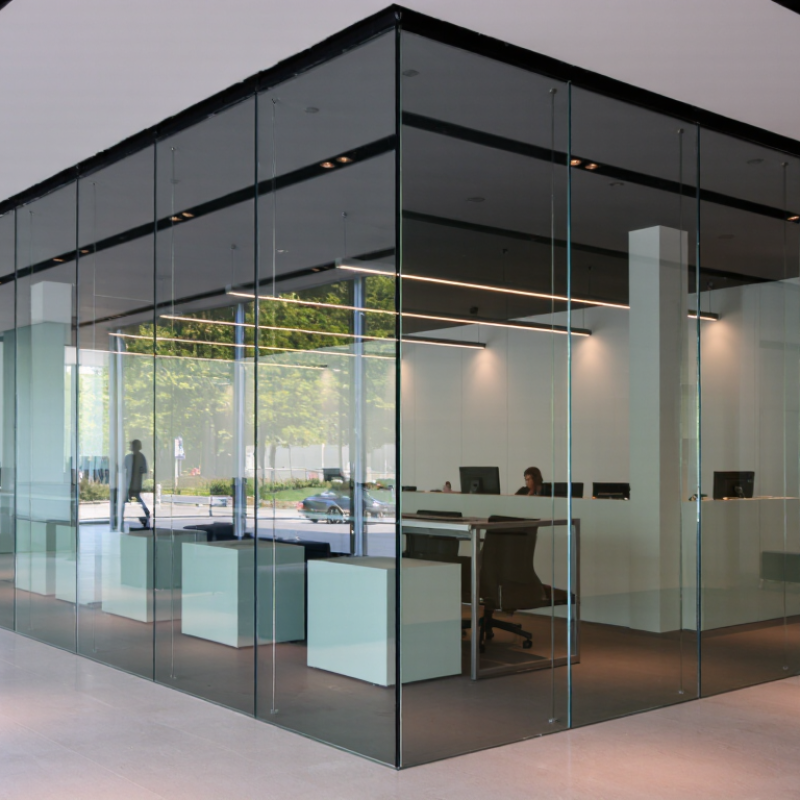
When a consultation room is brightly lit and the adjoining observation area is darker, people in the darker area may see through the glass, while people inside see a reflection. The effect can suit offices, reception areas, and some testing rooms. The coating may also soften direct views without blocking daylight. That is useful. But it is not a guarantee of privacy.
Lighting can change everything. At night, a lit room may become visible from outside, especially if the exterior is dark. Businesses should consider curtains or blinds for after-hours privacy and check the view from both sides at different times. A small on-site test can reveal surprises: reflections may obscure faces, or interior lights may weaken the effect. That assumption is easy to get wrong. Proper selection also depends on glass size, coating, and installation conditions, so discuss the space with a qualified glazing professional before making a decision.
Why Choose One-Way Glass for Your Business?
What Is One-Way Glass?
One-way glass is reflective glass that can provide daytime privacy when the exterior is brighter than the interior. The chart compares representative visible-light-transmission values—not privacy scores. Actual transmission depends on the product and installation; the one-way effect depends on the lighting balance and may reverse at night.
How One-Way Glass Works
Why Choose One Way Glass for Your Business?
How One-Way Glass Works
One-way glass is made with a partially reflective coating. Some light passes through, while some bounces back. The brighter side usually looks mirror-like; people on the darker side can see through it. Light matters most. The effect depends on the difference in brightness between the two spaces, not on the glass creating privacy by itself.
Picture a meeting room with bright ceiling lights and a dim corridor outside. From the corridor, the glass may look reflective, while staff inside can see out. But if the corridor becomes brighter than the room, the effect can weaken or even reverse. Not always. At night, interior lights may make people inside more visible to someone outdoors.
For a business, this can help screen a reception area, interview room, or office while preserving a view. The result still depends on lighting, glass placement, and the coating selected. Reflective glass can also change a room’s appearance and reduce the amount of daylight entering. It is worth checking the view from both sides at different times of day. For sensitive conversations, consider an additional privacy measure, such as blinds; one-way glass alone is not a dependable privacy barrier in every lighting condition.
Why Choose One Way Glass for Your Business? - How One-Way Glass Works
| Dimension |
How It Works |
Business Consideration |
| Basic principle |
One-way glass is typically a glass pane with a partially reflective coating. The coating reflects some light and transmits some light; it does not make the glass literally transparent in only one direction. |
Ask about visible-light transmission and reflectance for the specific product, since performance varies by glass type and coating. |
| Daytime privacy |
The side with more light tends to look more reflective, while people on the brighter side may have a harder time seeing into the darker side. |
It can help screen offices, reception areas, or meeting rooms when exterior light is stronger than interior light. |
| Nighttime conditions |
If the interior becomes brighter than the exterior, the reflective effect can appear stronger from outside. People outside may be able to see in. |
Plan for blinds, curtains, or another privacy measure when interior lighting is on after dark. |
| Lighting balance |
The privacy effect depends on the relative brightness on each side of the glass, not simply on the time of day. |
Review lighting, window orientation, and neighboring sightlines before relying on the glass for privacy. |
| Natural light and visibility |
Because some visible light passes through the pane, the glass can admit daylight while reducing clear views through it. The amount depends on the selected specification. |
Compare sample panes in the intended setting to check daylight, outward visibility, reflections, and appearance. |
| Common business uses |
It may be used for street-facing offices, consultation rooms, observation areas, and other spaces where a reflective exterior appearance is desired. |
Check local building, glazing, fire, and accessibility requirements, and confirm that the chosen glass is suitable for the application. |
| Energy performance |
A reflective coating may affect solar heat and light transmission, but the result depends on the complete glazing system, including the glass build-up and installation. |
Request product-specific performance data, such as visible-light transmission and solar heat gain, rather than assuming every reflective pane provides the same benefit. |
| Safety and security |
A reflective coating changes appearance and light transmission; by itself, it does not make ordinary glass stronger or provide guaranteed privacy. |
Specify suitable safety glazing where required and use an additional privacy solution if confidential activities must remain concealed. |
| Cleaning and upkeep |
Coated glass can require care appropriate to its coating and surface location. Abrasive materials or unsuitable cleaners may damage some finishes. |
Follow the glazing supplier’s cleaning instructions and confirm whether the coating is exposed or protected within the glazing unit. |
Practical note: One-way glass offers conditional visual screening, not guaranteed one-way privacy. Evaluate it under both daytime and nighttime lighting conditions before installation.
Key Benefits for Businesses
Why Choose One Way Glass for Your Business?
Key Benefits for Businesses
One-way glass can help businesses balance visibility with a greater sense of privacy. In a reception area, staff may see approaching visitors while keeping internal workspaces less exposed. It can also divide meeting rooms without blocking daylight, helping compact offices feel more open. Natural light matters. A brighter space may feel more welcoming to clients and less closed-in to employees. In retail settings, selective viewing can support discreet observation of an entrance or service area. The benefit depends on placement, glass specification, and the room’s purpose.
A practical advantage is flexibility: businesses can create visual separation without building a solid wall. That can preserve sightlines and make floor plans easier to adapt. One-way glass may reduce the need for blinds in some spaces, though glare and screen reflections can become problems. It is not magic. Its privacy effect relies on brighter light on the viewed side than on the observer’s side; after dark, interior lighting can reverse the effect. Test samples under actual lighting, and add curtains or other privacy measures where sensitive conversations occur. One small, overlooked detail can change the result.
Common Commercial Applications
In reception areas, one-way glass can separate a public lobby from staff workstations while preserving a clear view across the room. In retail settings, it can support discreet observation from a back office. Clinics and interview rooms may use it for supervised viewing, though privacy needs careful planning. The effect depends on lighting.
During daytime, a brighter public side and darker private side help create the mirror-like appearance. At night, interior lights can reverse that balance.
Not magic.
Businesses may need blinds or other privacy measures after dark, and visitors should not be led to assume the glass guarantees privacy.
The IEA’s 2023 Buildings report estimates that buildings account for about 30% of global final energy consumption. That figure covers buildings broadly, not one-way glass specifically. Still, it underlines why glazing choices deserve attention: large panes affect daylight, solar heat, and indoor comfort. In a shopfront, for example, strong afternoon sun may create glare on displays and increase cooling demand. One-way glass is not automatically an energy-saving upgrade; performance depends on the full glazing system, orientation, and local climate. A site assessment helps, though it can be easy to overlook how lighting changes after closing.
Factors to Consider Before Installation
One-way glass can screen a reception area or meeting room, but privacy depends on lighting. The brighter side appears reflective; the darker side remains more visible. At night, interior lights can reverse that effect. It is not guaranteed privacy. Before choosing a specification, compare visible light transmission, solar heat gain coefficient, and U-factor. The IEA’s 2023 Global Status Report for Buildings and Construction estimates that building operations used about 30% of global final energy in 2022. They also generated 26% of energy-related emissions. Glazing affects both daylight and cooling loads, so appearance alone is a weak basis for selection.
Tips: Ask for a full-size sample. View it from both sides under daytime and evening lighting. Confirm performance figures for the exact glass assembly, not just a coating.
Check the facade’s orientation and nearby shading. West-facing glass may bring sharp afternoon glare onto desks, while shaded windows may need different light transmission. Discuss frame compatibility, wind loads, condensation, and required safety glazing with a qualified glazing professional. A reflective finish can also create unwanted glare outside; request a site review where neighboring windows or roads face the facade. I would not assume a sample tells the whole story. Real conditions can look less polished.