Leave Your Message
Choosing the right Waterproof Glass requires more than comparing thickness or appearance. In practice, water resistance depends on the complete system: glass, seals, frames, drainage, and installation quality. A thick panel can still leak when its silicone joint is uneven or its frame lacks proper drainage.
This guide presents 10 practical tips for evaluating waterproof glass for bathrooms, balconies, shower enclosures, façades, and other moisture-heavy spaces. It examines glass type, edge quality, sealant compatibility, frame design, drainage paths, safety ratings, maintenance needs, and supplier documentation. These details matter when rain presses against a window or steam collects on a shower panel.
Small faults become expensive.
Reliable suppliers should explain performance limits clearly. Look for tested specifications, installation instructions, warranty terms, and evidence of quality control. Ask whether the product has been tested for water penetration under conditions similar to your project. A showroom sample may look perfect, yet its hidden joints can reveal more than its surface.
The guide also considers tempered and laminated options, because safety and waterproofing are related but different concerns. One protects against impact. The other depends heavily on the surrounding assembly. That distinction is easy to miss.
No product suits every building. Local climate, exposure, cleaning habits, and construction movement can change the result. A careful choice leaves room for these uncertainties, rather than trusting a promising label alone.
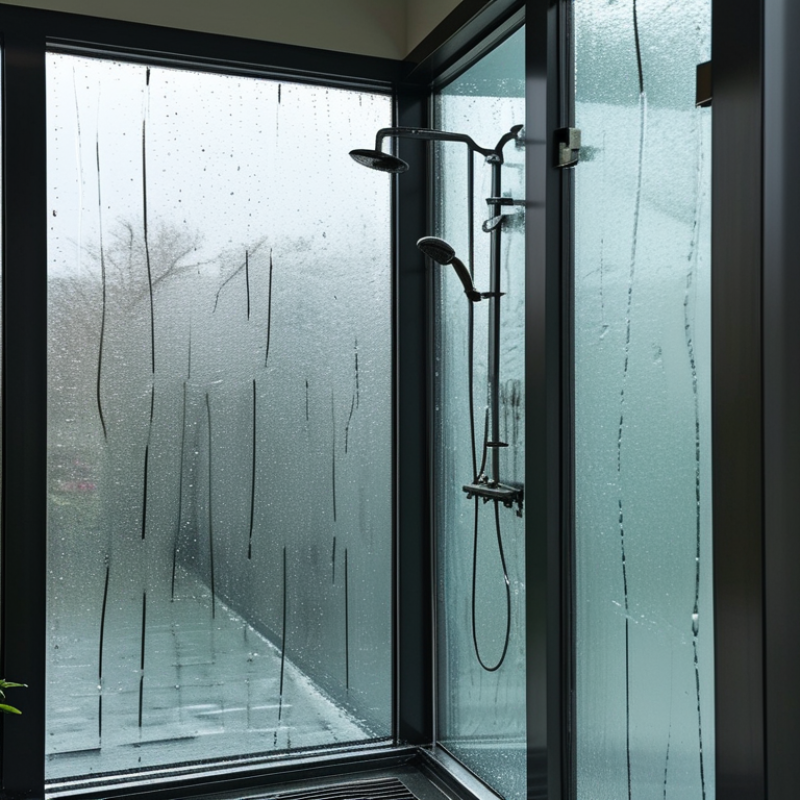
Waterproof glass usually means glass used in a system that resists water entry. Glass itself is nonporous, so it does not absorb rain or shower spray. The weak points are usually joints, edges, seals, and frames. Waterproof performance depends on how these parts work together. Tempered glass improves impact safety, while laminated glass can retain fragments after breakage. Neither option makes an installation automatically waterproof. A careful buyer should check sealant quality, drainage design, edge protection, and independent water-testing records.
Common applications include shower enclosures, bathroom partitions, skylights, curtain walls, glass roofs, aquarium panels, and outdoor doors. In a shower, water may collect around the bottom track if the slope is poor. On a skylight, wind-driven rain can enter through an incorrectly fitted gasket. These details matter more than a simple “waterproof” label. Experienced installers often inspect corners, screw holes, and transitions between glass and metal. Small defects can become visible after repeated temperature changes. It is not glamorous work, but it prevents leaks.
The term itself is imperfect. Some suppliers use it for water-resistant coatings, while others mean a fully tested assembly. Ask for the test method, pressure level, exposure time, and maintenance instructions. Clear documentation is more trustworthy than a confident sales phrase. Even a well-designed system may fail when seals age or drainage becomes blocked. That possibility deserves honest attention before selection.
| No. | Selection Dimension | What to Look For | Verified Technical Considerations | Common Applications |
|---|---|---|---|---|
| 1 | Understand the Definition | Treat “waterproof glass” as a glass system designed to resist water penetration, rather than as a special type of glass that is inherently sealed. | Glass is non-porous and does not absorb liquid water under normal conditions. Water resistance mainly depends on the frame, gaskets, sealants, joints, drainage paths, and installation quality. | Windows, doors, shower enclosures |
| 2 | Select the Glass Configuration | Choose monolithic, laminated, insulated, or multi-panel construction according to the exposure and safety requirements. | Laminated glass retains the interlayer and bonded fragments after breakage. Insulating glass units use sealed cavities to improve thermal performance, but their edge seals must remain intact. | Façades, skylights, bathrooms |
| 3 | Check Safety Glazing | Use tempered or laminated safety glass where human impact, fall-through, or overhead-glazing risks exist. | Tempered glass is heat-treated for increased strength and breaks into smaller granular fragments. Laminated glass is held together by an interlayer and can provide a barrier after breakage. Local building codes determine where safety glazing is required. | Shower doors, glass doors, railings |
| 4 | Evaluate Water Exposure | Identify whether the glass will face intermittent splashing, continuous humidity, driving rain, standing water, or pressure-driven water. | Higher exposure requires properly sloped surfaces, weep or drainage paths, compatible gaskets, and tested joints. A glass pane alone cannot prevent leakage through surrounding construction. | Wet rooms, exterior walls, pool areas |
| 5 | Inspect the Frame and Gaskets | Choose frames and seals made from materials compatible with the intended moisture, temperature, and cleaning conditions. | Continuous gaskets, correctly compressed seals, corner joints, and sill drainage are critical. Damaged or permanently compressed gaskets can allow water to bypass an otherwise intact glass panel. | Curtain walls, storefronts, windows |
| 6 | Verify Sealant Compatibility | Specify sealants that adhere to the glass and frame materials and remain elastic throughout the expected service conditions. | The sealant must be compatible with coatings, laminated-glass interlayers, gaskets, and adjacent materials. Surface preparation and joint dimensions affect adhesion and long-term water resistance. | Glazed façades, aquariums, shower screens |
| 7 | Consider Thermal and Solar Performance | For exterior projects, balance water resistance with insulation, solar control, and condensation management. | Low-emissivity coatings and insulating glass can reduce heat transfer. Warm-edge spacers and adequate interior humidity control may help reduce condensation at the glass edge, but they do not replace water-tight detailing. | Energy-efficient windows, façades, conservatories |
| 8 | Check Glass Thickness and Loading | Select thickness and panel construction based on dimensions, wind load, impact risk, support conditions, and applicable structural requirements. | Waterproofing does not determine structural capacity. Large or exposed panels may require engineering calculations for wind pressure, deflection, thermal stress, and the weight carried by the supporting system. | Skylights, balustrades, large windows |
| 9 | Review Testing and Standards | Request documented performance information for the complete glazing assembly and confirm compliance with local regulations. | Relevant evaluations may address water penetration, air leakage, structural performance, safety glazing, and insulating-glass durability. Test methods and required ratings vary by region and application. | Commercial façades, public buildings, schools |
| 10 | Plan Installation and Maintenance | Use trained installers and establish a maintenance schedule for seals, drainage openings, joints, and hardware. | Common failure causes include blocked weep holes, poor sill flashing, inadequate sealant joints, movement between materials, and unsealed penetrations. Regular inspection helps identify leakage before surrounding materials are damaged. | All glazed assemblies |