Leave Your Message
Engineered for optimal visibility, touch sensitivity, and durability in vehicle interiors.
The modern automotive interior has undergone a radical transformation over the past decade. Mechanical buttons and analog dials have been systematically replaced by expansive, high-resolution digital interfaces. At the heart of this digital cockpit is the automotive center console, serving as the primary command center for infotainment, navigation, climate control, and vehicle settings. As these screens grow larger and more prominent—often spanning the entire width of the dashboard in premium electric vehicles—the optical performance of the cover glass becomes a paramount safety and usability concern. This is where Ag Glass Haze Control for Automotive Center Consoles emerges as a critical engineering discipline.
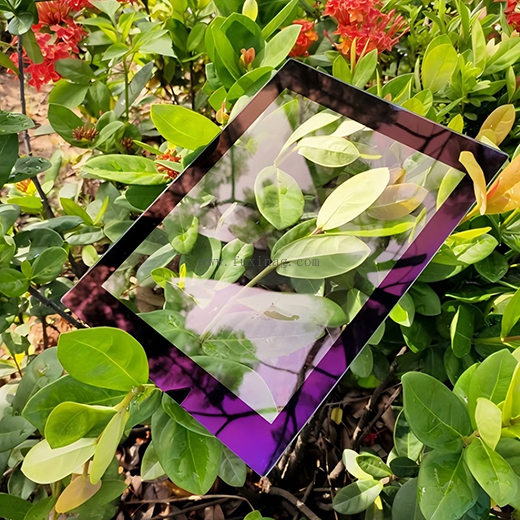
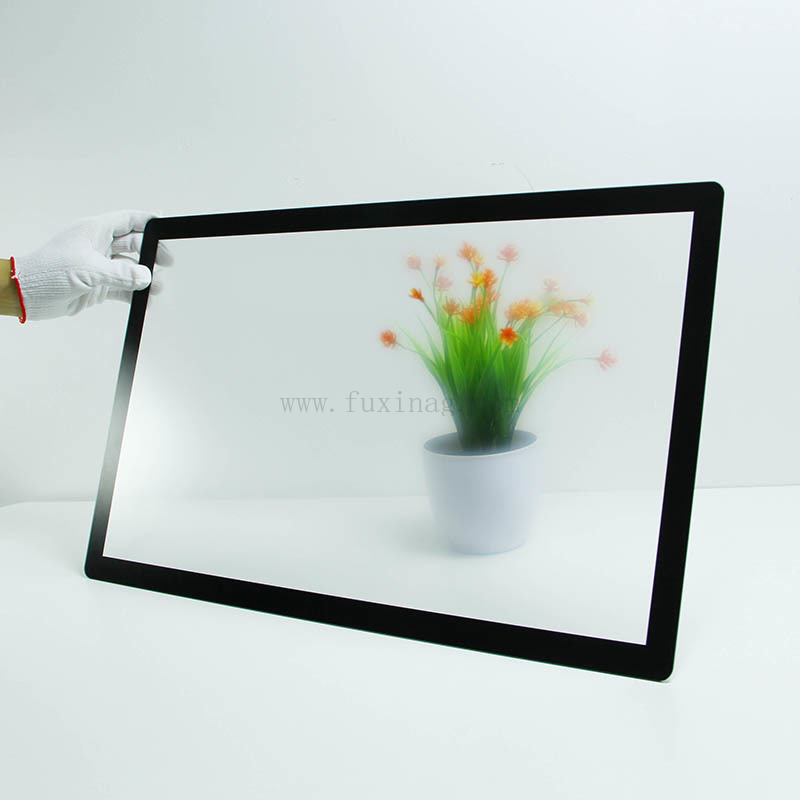
Anti-Glare (AG) glass is designed to minimize the reflection of ambient light, such as direct sunlight or streetlamps, which can cause severe glare and wash out the display contents. This is achieved by microscopically roughening the surface of the glass, usually through a precise chemical acid-etching process or specialized nano-coatings. This roughened surface scatters incident light rather than reflecting it directly back into the driver's eyes. However, this scattering introduces a secondary optical phenomenon: Haze.
Haze is defined as the percentage of transmitted light that deviates from the incident beam by more than 2.5 degrees on average. While a higher haze value effectively diffuses harsh reflections, it simultaneously reduces the sharpness, contrast, and perceived resolution of the underlying LCD or OLED display. If the haze is too high, the screen appears "milky" or blurry, a phenomenon known as "sparkle," which severely degrades the user experience. Therefore, Ag Glass Haze Control is the delicate, highly technical balancing act of achieving maximum glare reduction (high gloss reduction) while maintaining absolute display clarity (low haze and low sparkle). For automotive center consoles, where rapid information processing by the driver is essential for safety, mastering this balance is non-negotiable.
Engineers must calibrate the micro-roughness of the AG glass to ensure that bright sunlight is diffused without compromising the crispness of high-definition map data and rear-view camera feeds.
Sparkle occurs when the AG surface structure interacts with the display's pixel matrix. Advanced haze control minimizes this optical interference, ensuring a smooth, paper-like viewing experience.
Beyond optics, the etching process used for haze control creates a velvety texture. This provides a premium tactile feel for touchscreens and prevents fingers from "sticking" to the glass during swiping gestures.
The commercial landscape for automotive cover glass is experiencing unprecedented growth, driven primarily by the Electric Vehicle (EV) revolution and the shift towards autonomous driving technologies. Automakers are competing aggressively on the interior user experience (UX). Large center consoles, such as the 15-inch to 17-inch displays seen in Tesla, Rivian, and Ford Mustang Mach-E, or the massive pillar-to-pillar screens like the Mercedes-Benz MBUX Hyperscreen, are becoming industry standards rather than luxury exceptions.
From an industrial perspective, producing Ag Glass with precise Haze Control for these massive automotive center consoles presents significant manufacturing challenges. Unlike consumer electronics (like smartphones or tablets), automotive displays are subjected to extreme environmental conditions. The glass must withstand temperatures ranging from -40°C to +85°C, high humidity, continuous UV exposure without yellowing, and stringent crash safety standards (Head Impact Criteria). Furthermore, achieving uniform haze across a large, often curved, piece of glass requires state-of-the-art CNC machining, chemical etching baths with perfect temperature and concentration control, and rigorous automated optical inspection (AOI).
Currently, the industry standard for automotive center consoles typically targets a gloss level of 50-70 GU (Gloss Units) and a haze level strictly controlled between 3% to 8%, depending on the distance between the cover glass and the display panel (air gap vs. optical bonding). Optically bonded displays can tolerate slightly higher haze without exhibiting sparkle, allowing for better glare reduction. The market is seeing a rapid shift from traditional spray-coated AG solutions—which can wear off over time—to chemical acid-etched AG glass, which alters the fundamental structure of the glass surface, providing permanent haze control and superior durability.
To truly understand the value of strict Ag Glass Haze Control, we must examine the specific scenarios drivers encounter daily. The center console is no longer just a radio; it is a vital safety and operational interface.
Imagine driving a convertible or a vehicle with a large panoramic sunroof on a bright summer day. Sunlight streaming directly onto a standard glossy screen creates a blinding mirror effect. The driver cannot see the navigation map, the speedometer (if integrated into the center display), or climate controls. This forces the driver to lean over, squint, or shade the screen with their hand—all of which take attention away from the road, creating a severe safety hazard. Properly calibrated AG glass diffuses this intense light source. The haze control ensures that while the reflection is blurred out, the high-contrast UI elements of the navigation system remain visible and legible at a quick glance.
At night, the dynamics change. The center console becomes a prominent light source within the dark cabin. If the glass has poor optical properties, the light from the display can reflect off the side windows or the windshield, causing distracting ghost images for the driver. Furthermore, modern vehicles utilize OLED or advanced local-dimming LCD panels to achieve "true blacks." If the cover glass has excessive haze, ambient street lighting can cause the dark areas of the screen to glow milky gray, ruining the aesthetic and reducing contrast. Expert haze control maintains the deep black levels of the display while mitigating internal cabin reflections.
Automotive center consoles are high-touch surfaces. A glossy screen quickly becomes covered in unsightly fingerprint smudges, which become highly visible under sunlight and further degrade display clarity. The chemical etching process used for AG haze control inherently reduces the contact area between the finger and the glass. When combined with an Anti-Fingerprint (AF) oleophobic coating, the result is a surface that resists smudges, is easy to clean, and provides a smooth, frictionless glide for multi-touch gestures like pinch-to-zoom on maps. The controlled haze effectively masks minor micro-scratches and residual oils that would otherwise be glaringly obvious on a polished screen.
The trajectory of Ag Glass Haze Control for Automotive Center Consoles is pointing toward deeper integration with emerging display technologies and complex geometries.
1. 3D Curved and Free-Form Glass: Interior designers are moving away from flat, rectangular screens. The future belongs to seamlessly integrated, curved displays that wrap around the driver. Applying uniform AG etching and controlling haze consistently across complex 3D curves—where the acid pooling and reaction rates differ based on gravity and surface tension—is the current frontier of glass manufacturing technology.
2. Integration with AR HUDs: As Augmented Reality Heads-Up Displays (AR HUDs) become prevalent, the center console must work in optical harmony with the windshield. The cover glass of the center console must not create reflections that interfere with the HUD projection. This requires multi-layer coatings combining AG, Anti-Reflective (AR), and specialized polarization filters.
3. Smart Dimming and Switchable Haze: Research is underway to develop electrochromic or liquid crystal-based cover glass that can actively change its haze and light transmission properties based on ambient lighting conditions. In bright sunlight, the glass could increase its haze to block glare; at night, it could switch to a perfectly clear state for maximum resolution.
4. Sustainable Manufacturing: The chemical etching process for AG glass traditionally involves hydrofluoric acid, which poses environmental and safety challenges. The industry is trending towards developing eco-friendly etching solutions and closed-loop water recycling systems that achieve precise haze control without the severe environmental footprint.
Founded in 2012, registered capital $1.5 million & 21000+m² plant, Fuxin Glass is an ODM/OEM provider for glass deep-processing service over 13 years, accumulating rich industry experience. We process base glass into customized cover glass with AG/AR/AF/AM surface coating and silk screen printing for touch screen, smart control devices, home appliances, lighting, and other special optical applications—including advanced Automotive Center Consoles.
Our factory is near the beautiful Wanlv Lake, Heyuan City, China. The factory boasts a comprehensive suite of precision glass processing equipment, including glass tempering lines, fully automatic CNC cutting and edging lines, a large-scale screen printing line, linear and custom-shaped edging machines, and AG, AF, AR, and Anti-bacterial glass spraying.
Leveraging a strong R&D and sales team, production capacity, and a stable supply chain, Fuxin Glass has grown to become one of China's top 3 electronic and electrical cover glass manufacturers and enjoys a global reputation. We maintain stable partnerships with many renowned global brands, including TCL, HKC, CVTE, OKV, HUAWEI, KONKA, SEEWO. The company has a team of over 50 leading professional technical personnel. Based on the enterprising thinking of building a business with integrity, creating a new future, technological creativity and leading by science and technology, we are constantly innovating. We always adhere to the principle of "integrity, quality and win-win" and are willing to establish good long-term cooperative relationships with customers all over the world!
Fuxin Glass will give you quality and service that goes far beyond anyone else in the automotive display glass sector.
Our factory has 13-year of OEM/ODM experience.
ISO, RHOS, GS, JIS Z certificate.
24-hours Professional after-sale service.
Specializing in the research, design, production, and sale of electronic display glass.
Fuxin Glass owning a leading R&D team which combines of a total of 50 personnel.
Top 3 A-share listed electronic display glass manufacturer in China.
Professional manufacturer of AG glass, AM glass, AR glass, AF glass, and various electrical glass.
Our Customers: continuous cooperation over decades with the well known customers, including TCL, BOE, CVTE, Hisense, HKC, HUAWEI and etc.
Explore our full range of customized cover glass products designed for next-generation vehicle interiors.